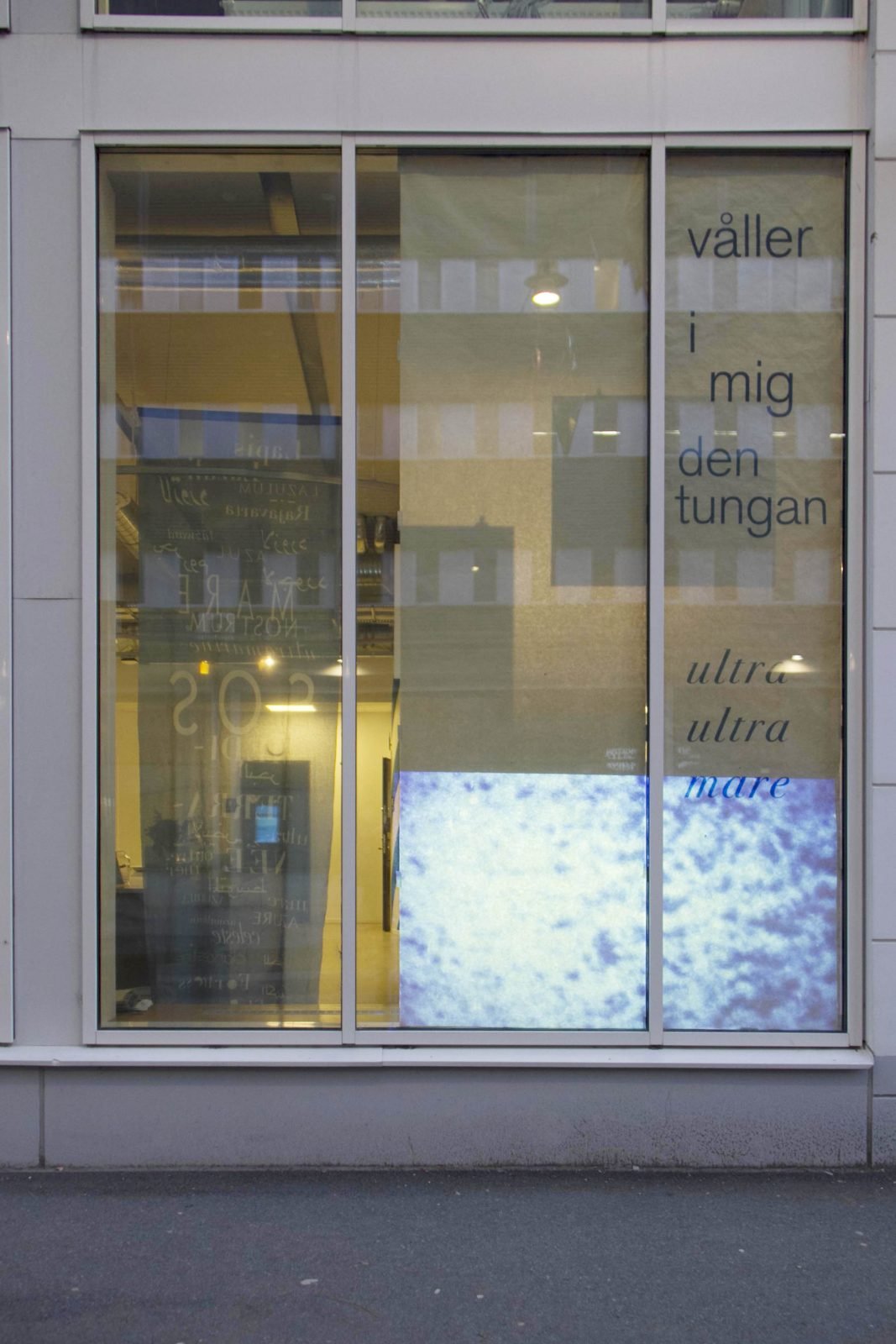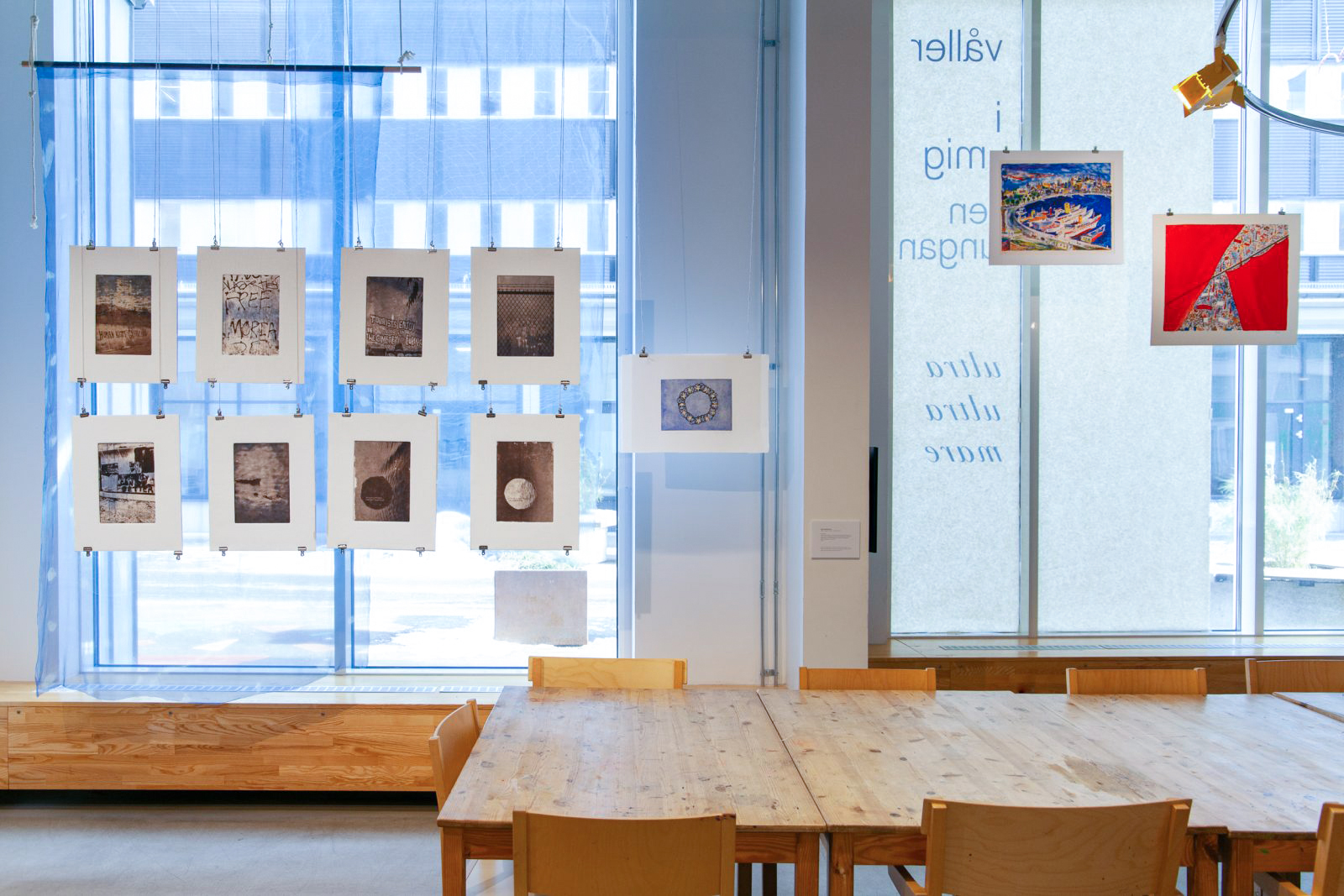
16 mm film transferred to HD, video projection on gampi paper 8 min, color, silent; video on monitor, 4 min, color, silent.
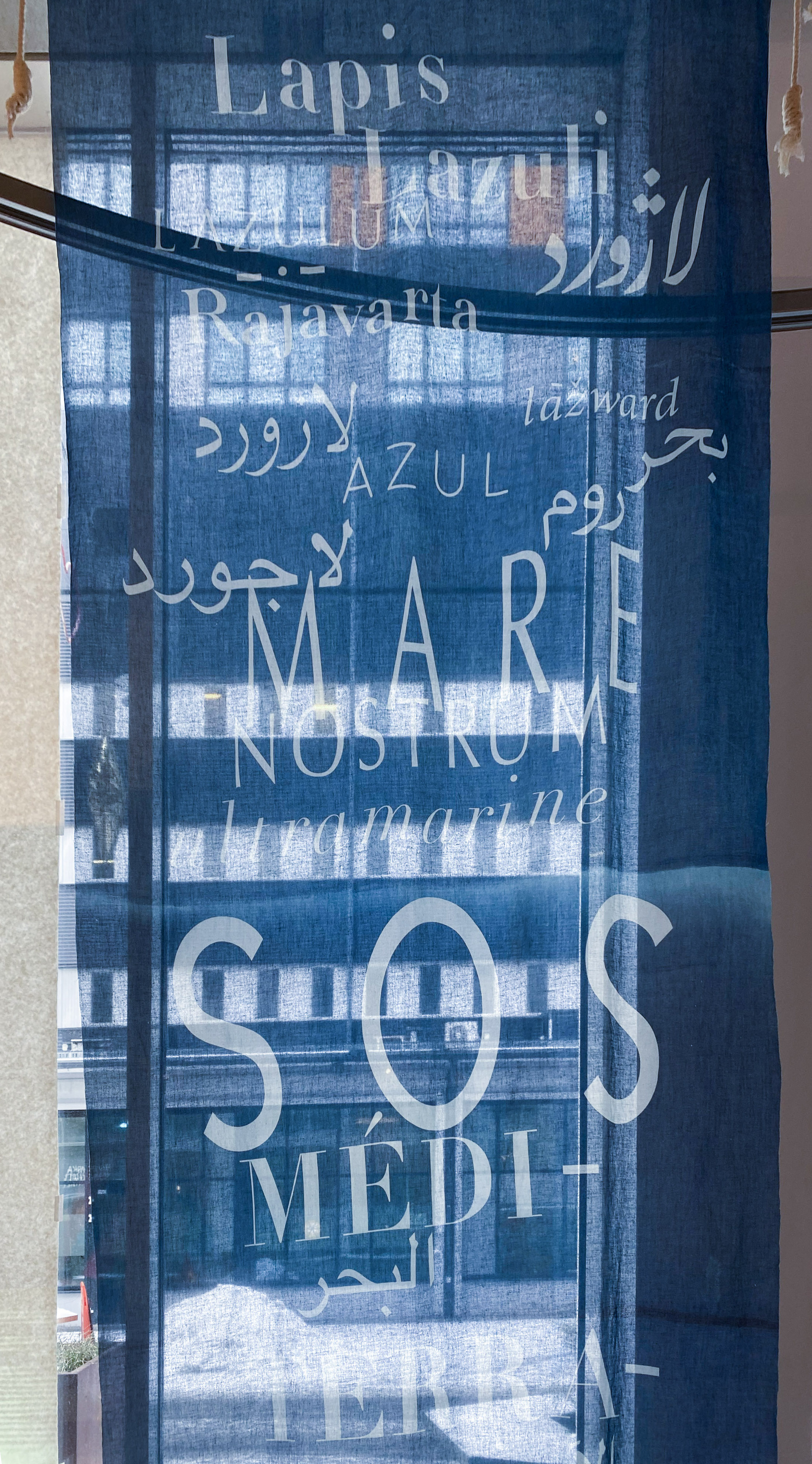
Cyanotype on silk, cyanotype on cotton, salt print (with salt from the Mediterranean Sea) on kozo paper 46 g, chine collé, photopolymer with ultramarine etching ink made from lapis lazuli (Afghanistan, standard grade), on Hahnemühle paper 300 g, linen passepartout. Dimensions variable.
2026
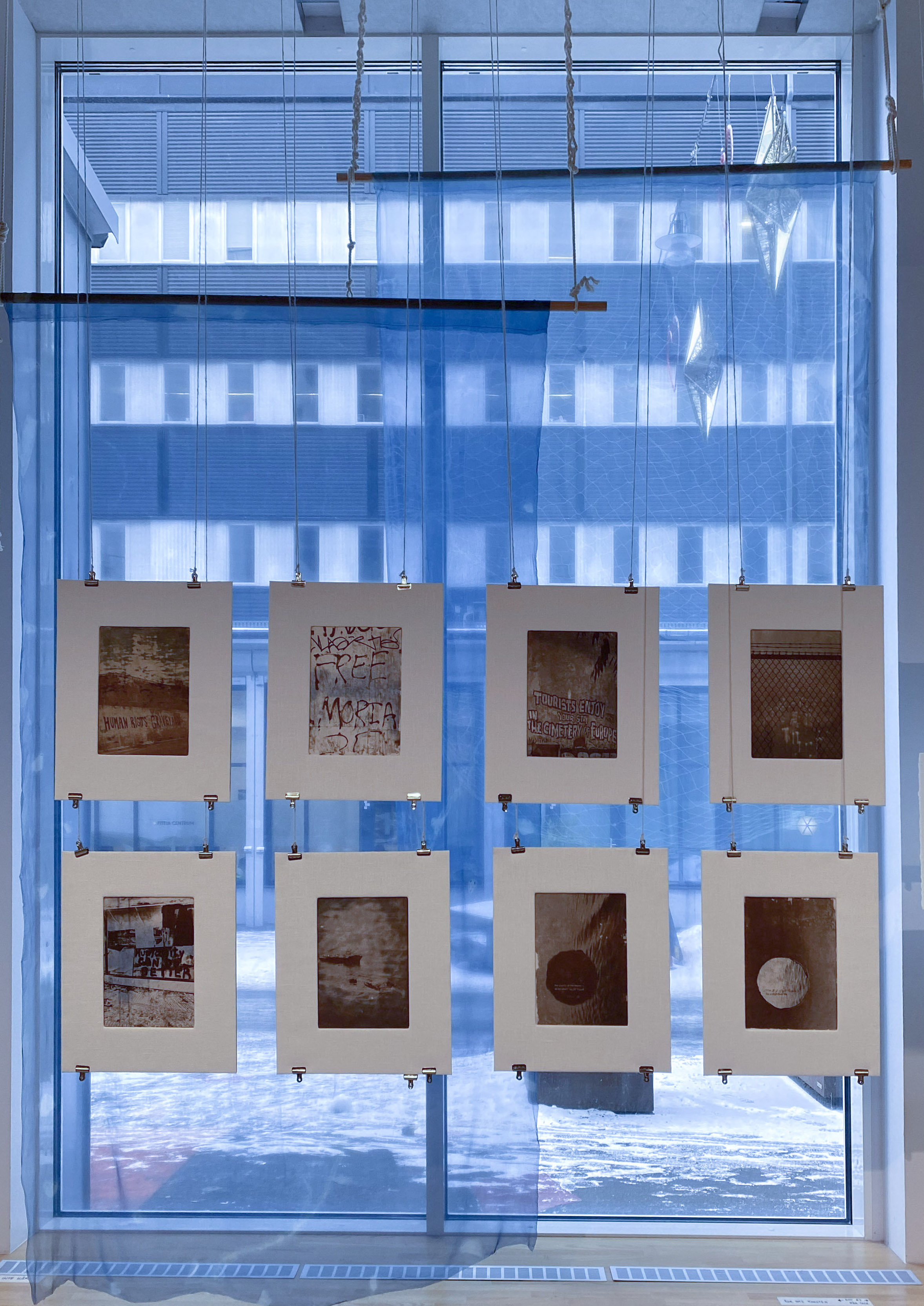
VÅLLER I MIG DEN TUNGAN – ultra ultra mare explores humanity’s relationship to the sea, and reflects on the long history of mobility and connectivity across the Mediterranean.
The exhibition is part of the project "Husera omtänkande i samlingar /Housing Rethinking in Collections" initiated and led by Grafikens Hus in collaboration with Botkyrka Konsthall. The project is based on the question of how collections can be spaces for critical conversation, community and collaboration: How can museum printmaking collections contribute to a more democratic cultural heritage?
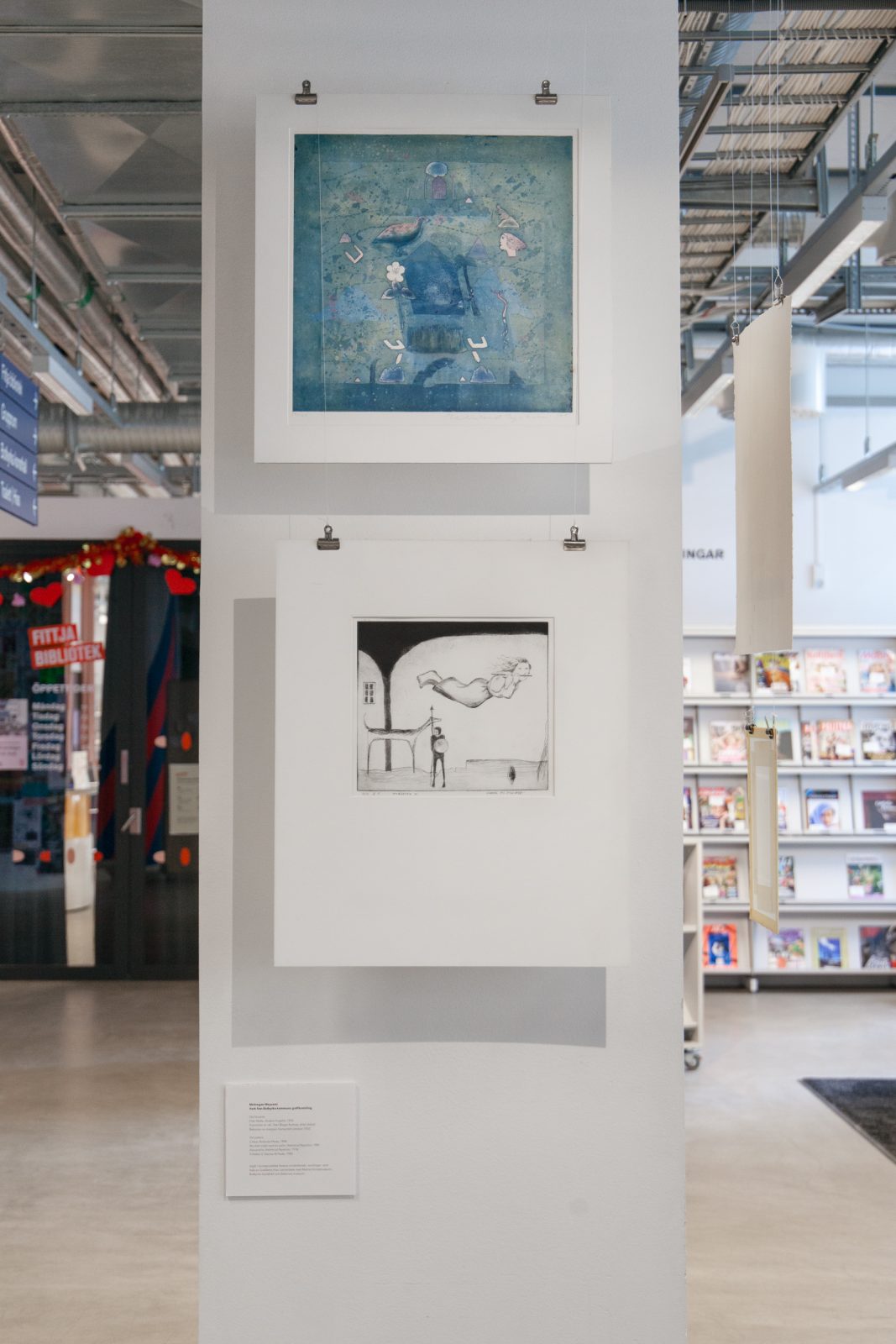
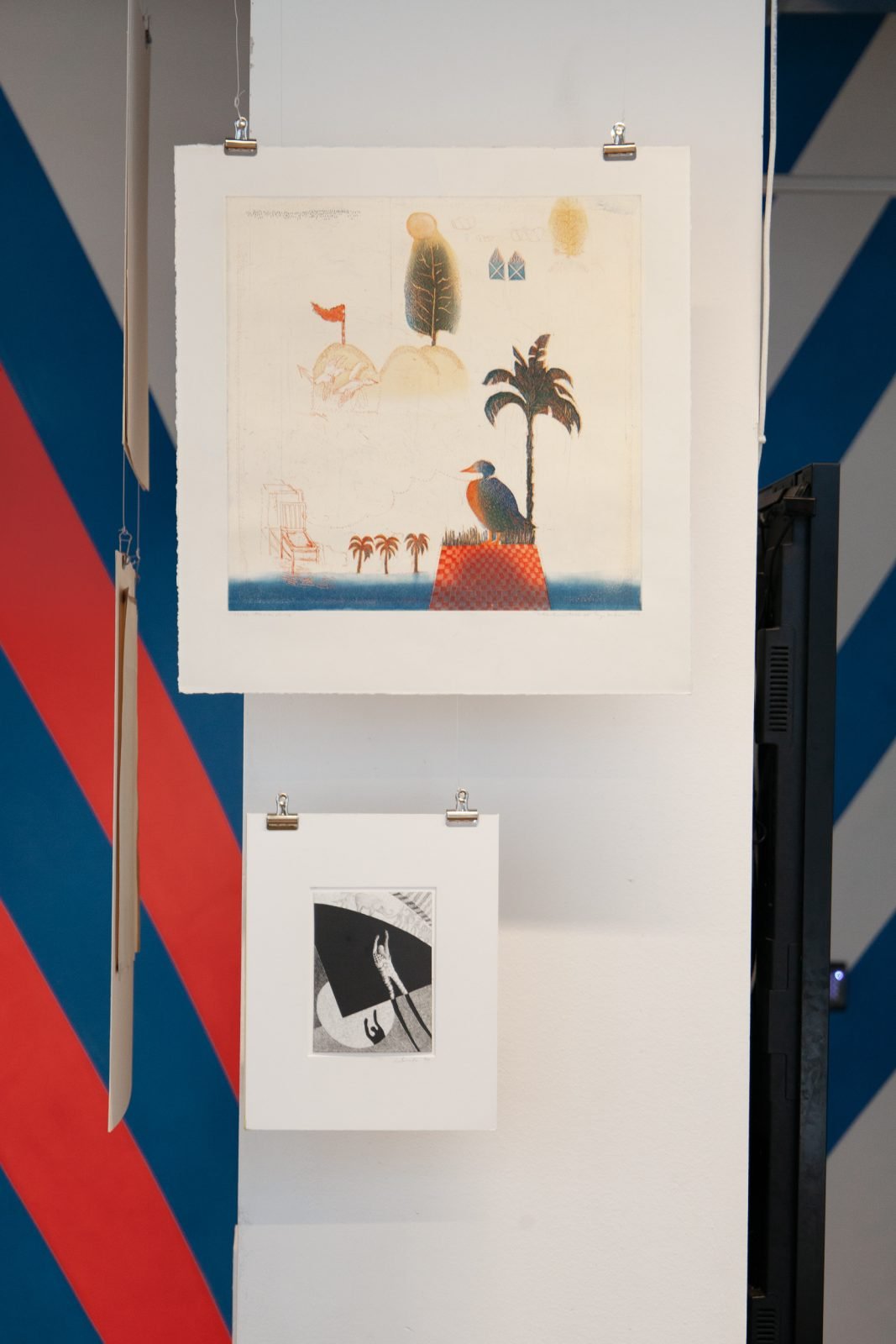
The works presented here emerged from an examination of Botkyrka Konsthall’s printmaking collection and are developed in response to, and in dialogue with, the collection itself. The recurring maritime motifs in the collection, opened up the sea for me as an archive in itself — a site of both wonder and violence, bearing histories, and shaping movement, exchange, and migration across and beyond borders.
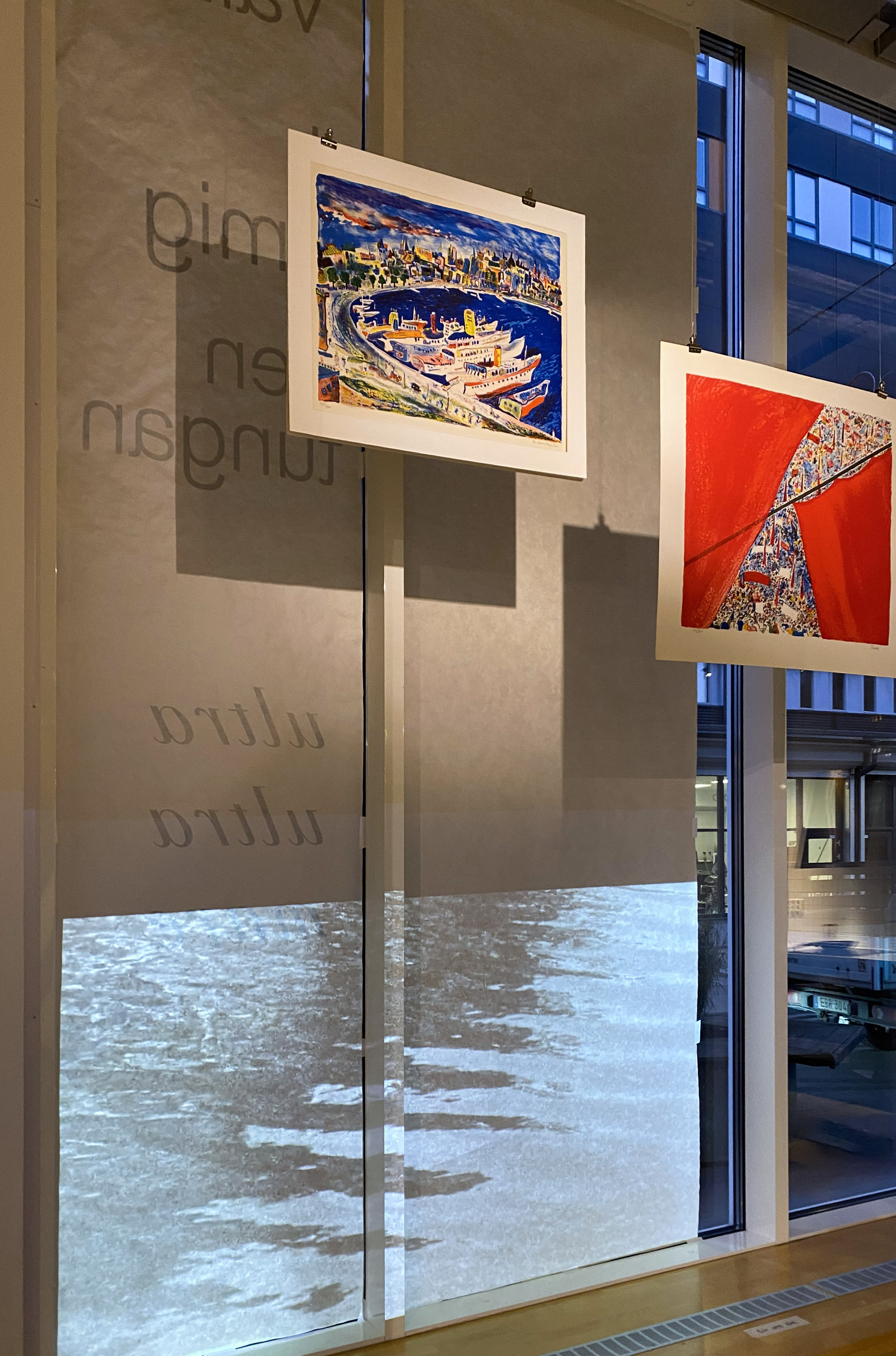
The work From Malta (1976) by Anders Fogelin—depicting a sunny and colorful day at the harbor—, from the collection (among others), became a point of departure for the installation, to reflect on the Mediterranean sea: as a site of cultural and epistemological exchange, while foregrounding it as a racialized necropolis for the people on the crossings, shaped by the EU’s fatal anti-migrant policies.
In this context, the Mediterranean is not approached as a neutral landscape, but rather as a contested archive: a charged space whose meaning depends on perspective, power, and positionality; a haunted geography demanding justice and pointing toward a future still deferred.
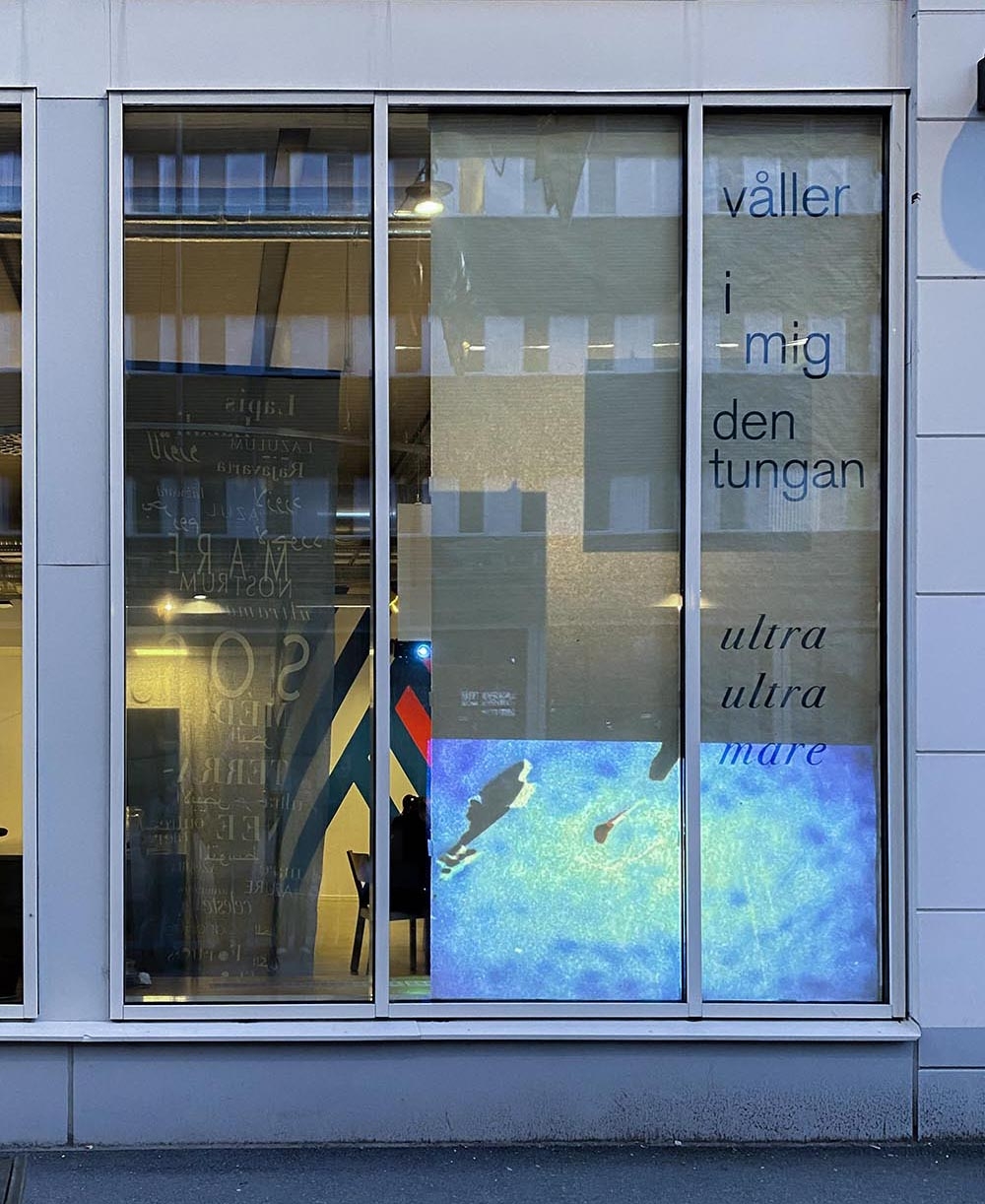
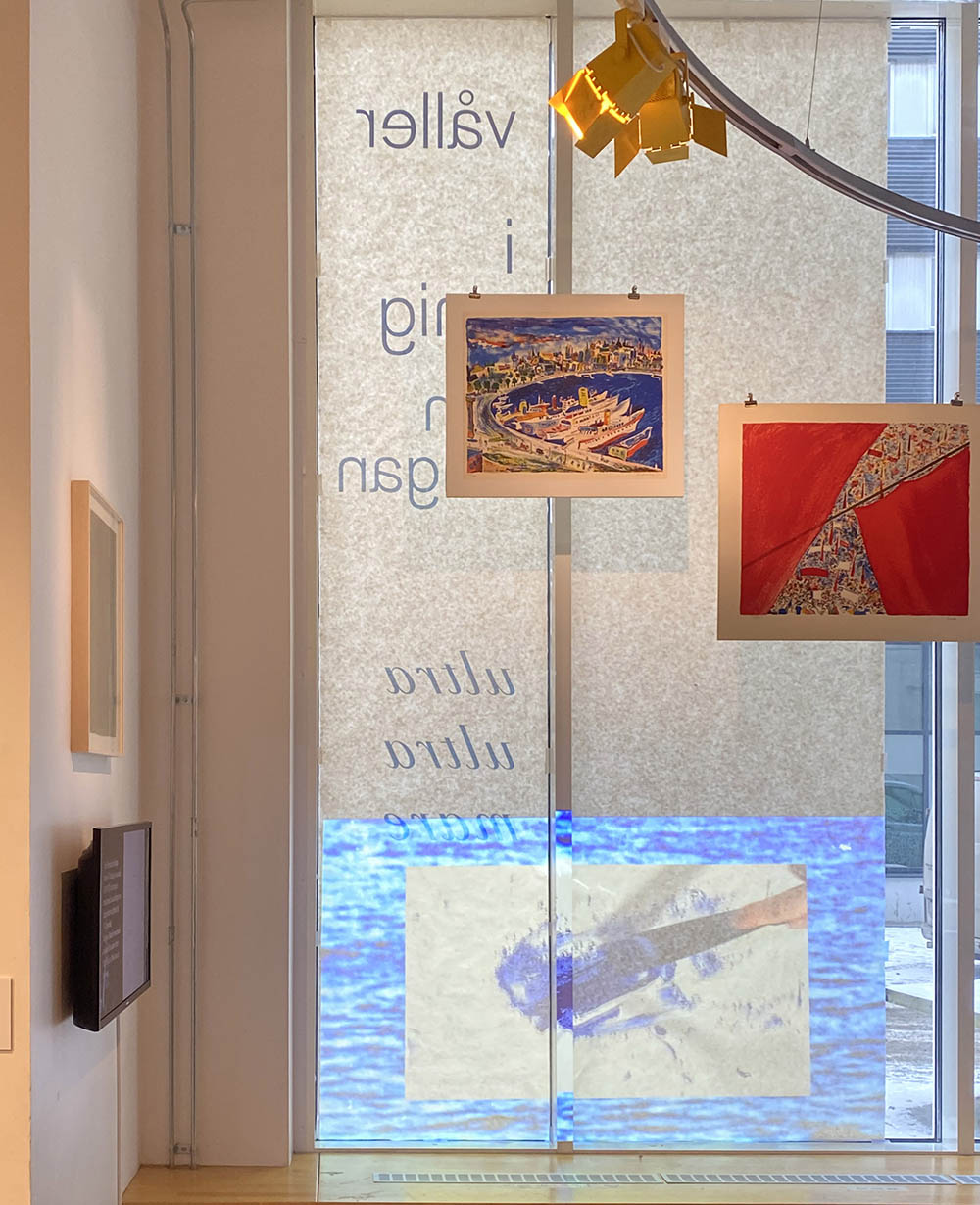
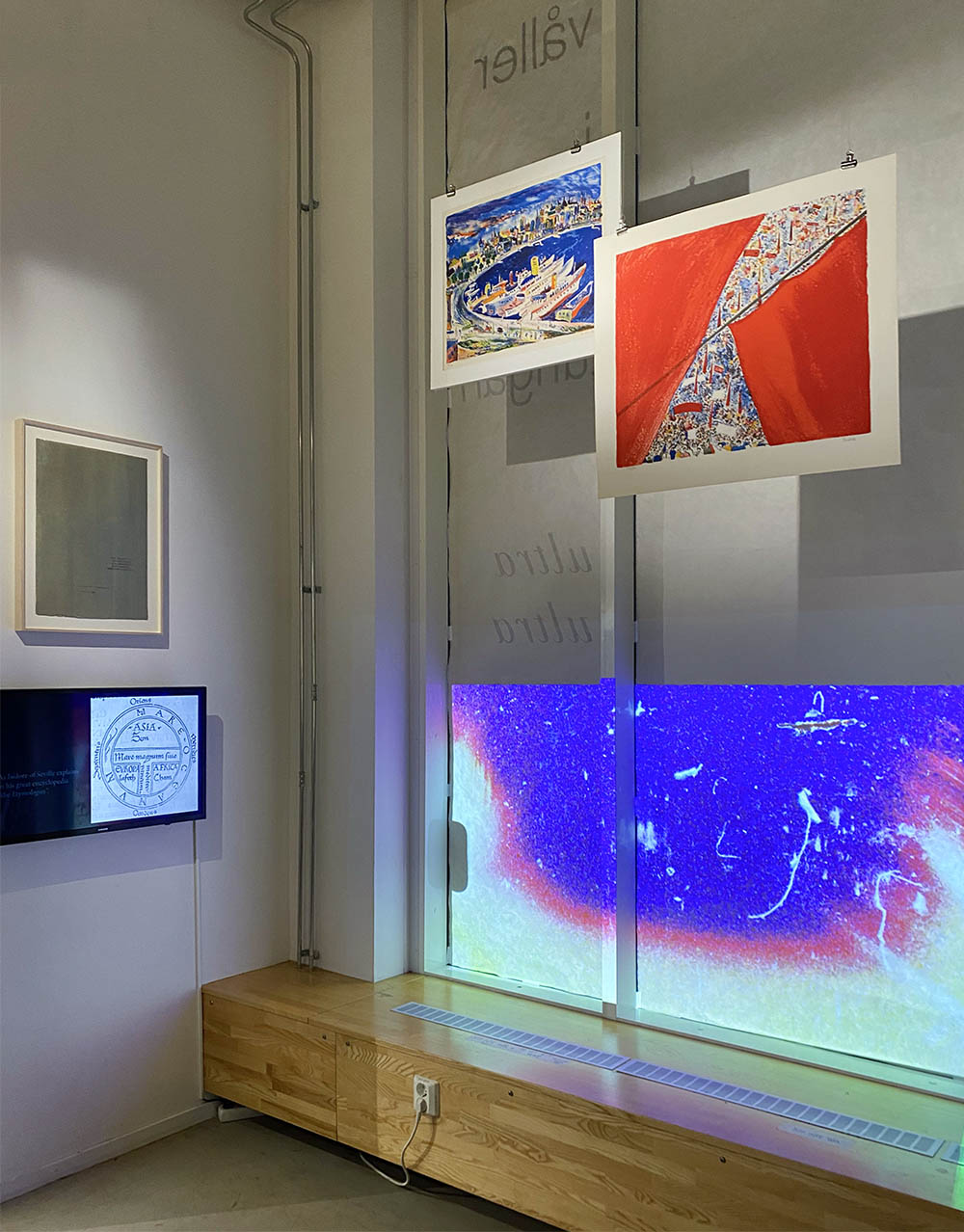
Installation view, Botkyrka Konsthall, 2026.
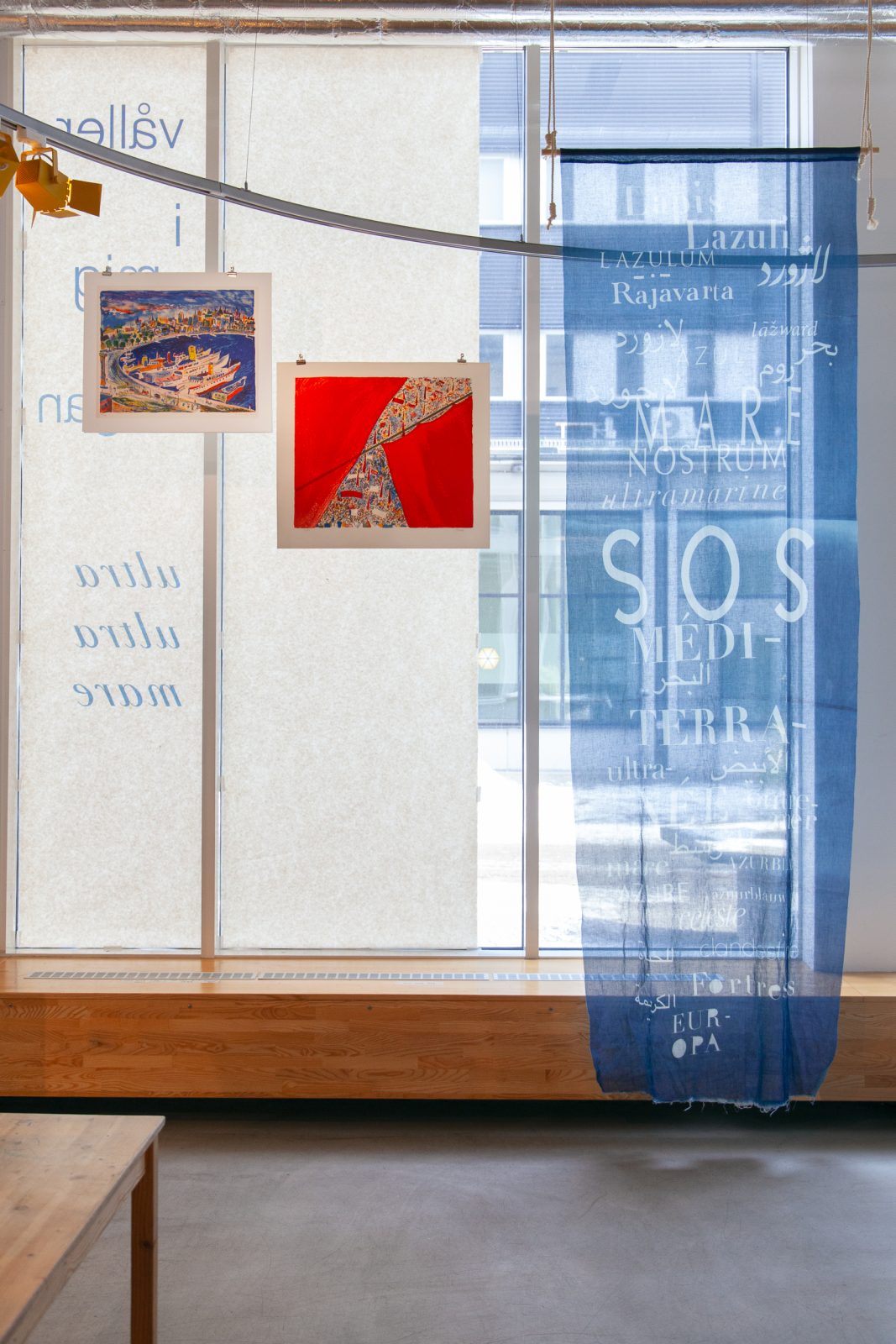
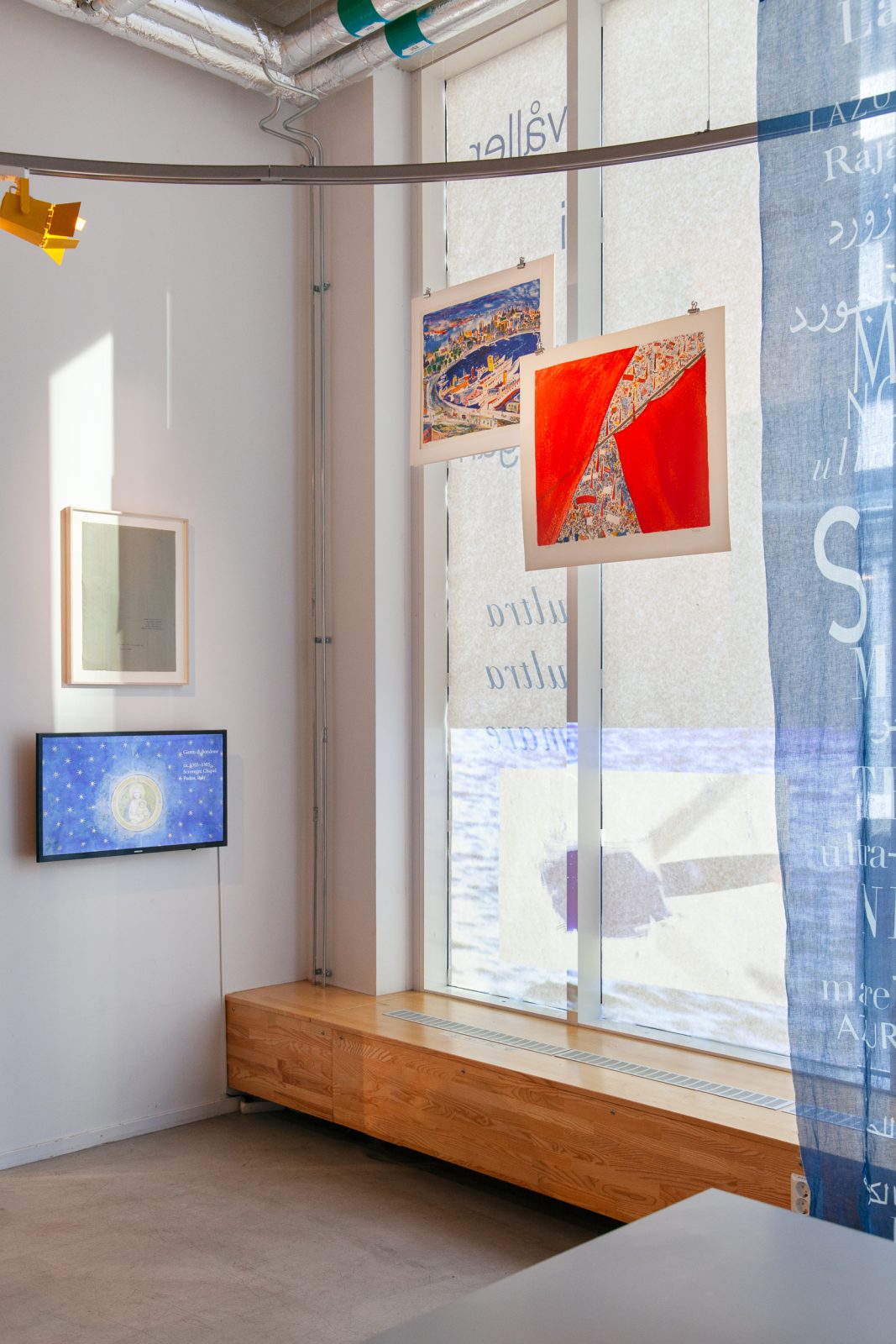
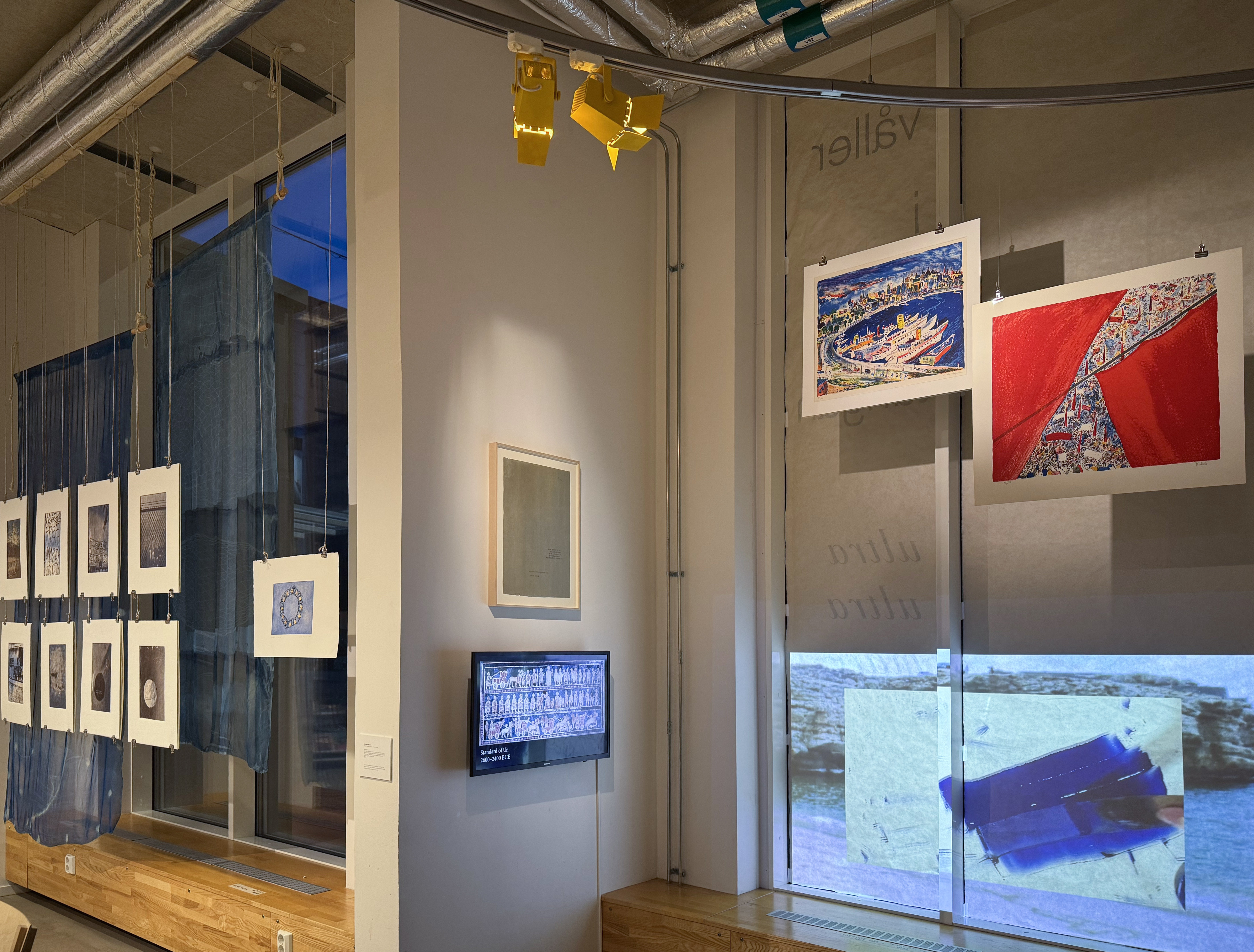
Video projection on gampi paper. Three works from the Botkyrka collection (from right):
Framtiden är vår [The Future Is Ours], Rudnäs (year unknown),
Från Malta,[From Malta] Anders Fogelin (1976),
Krigets levande ansikte [The Living Face of War] Humanitet, October 1933, Sven “X:et” Erixson.
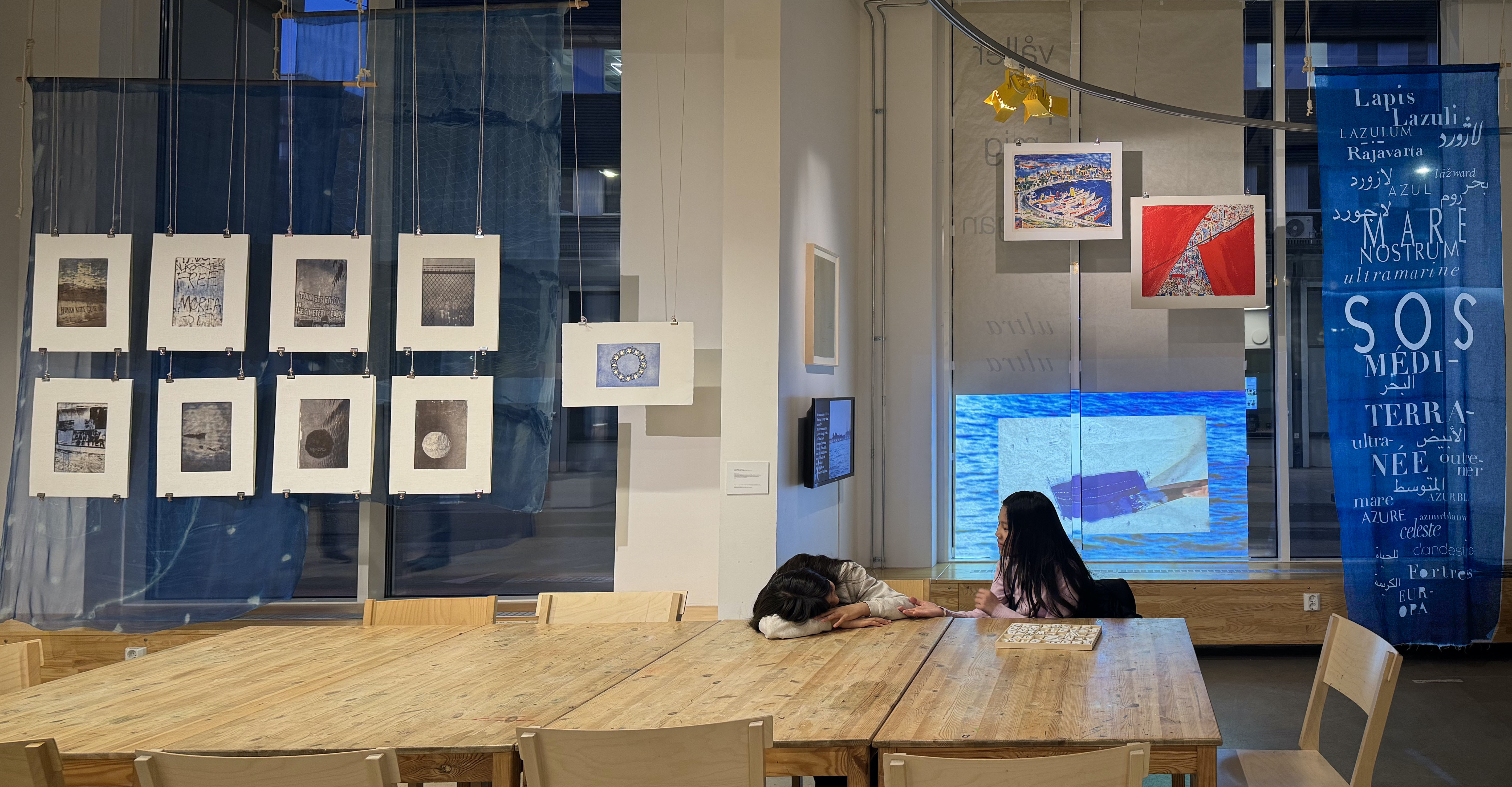
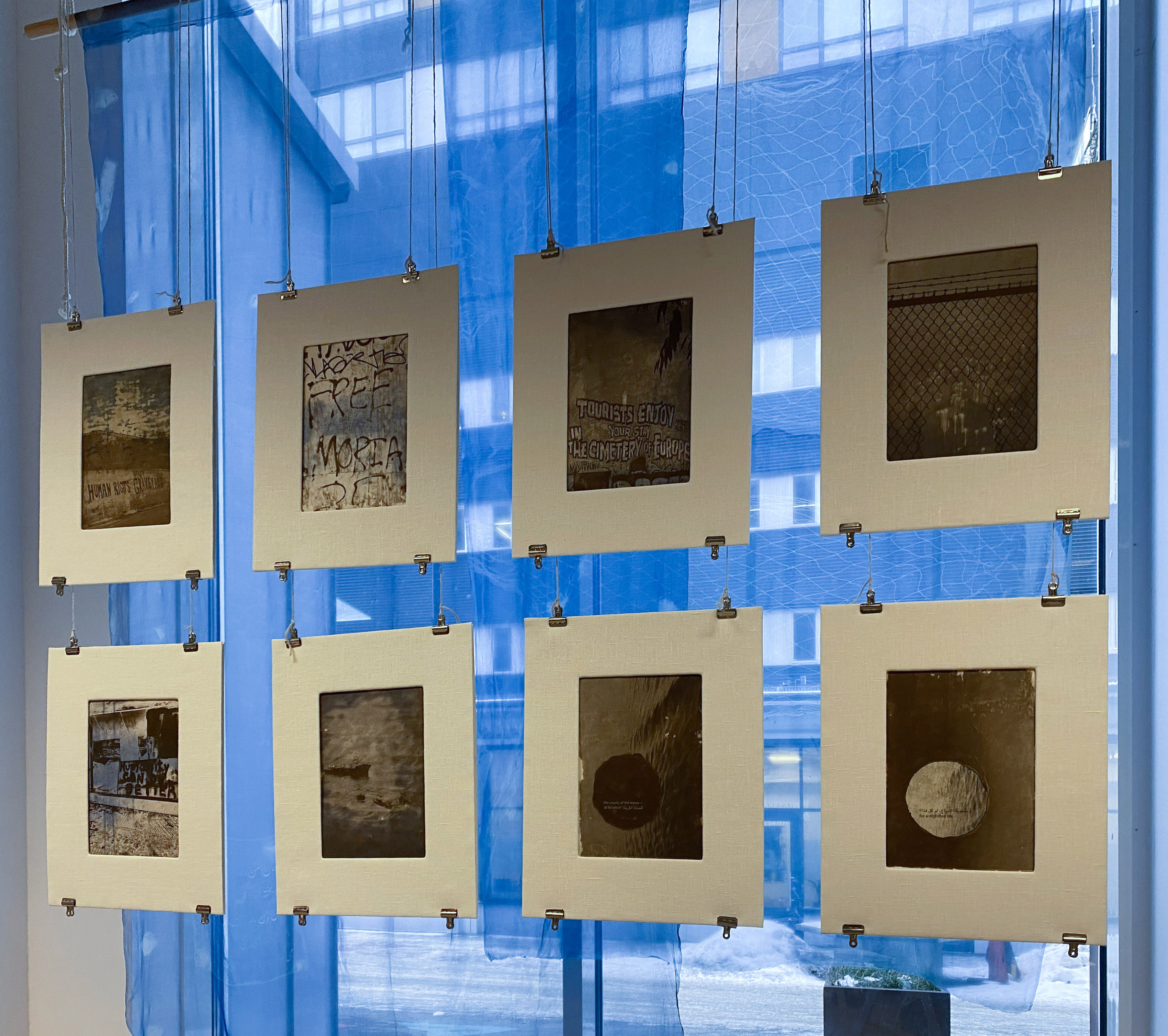
This body of work is constructed through a double exposure of image and material.
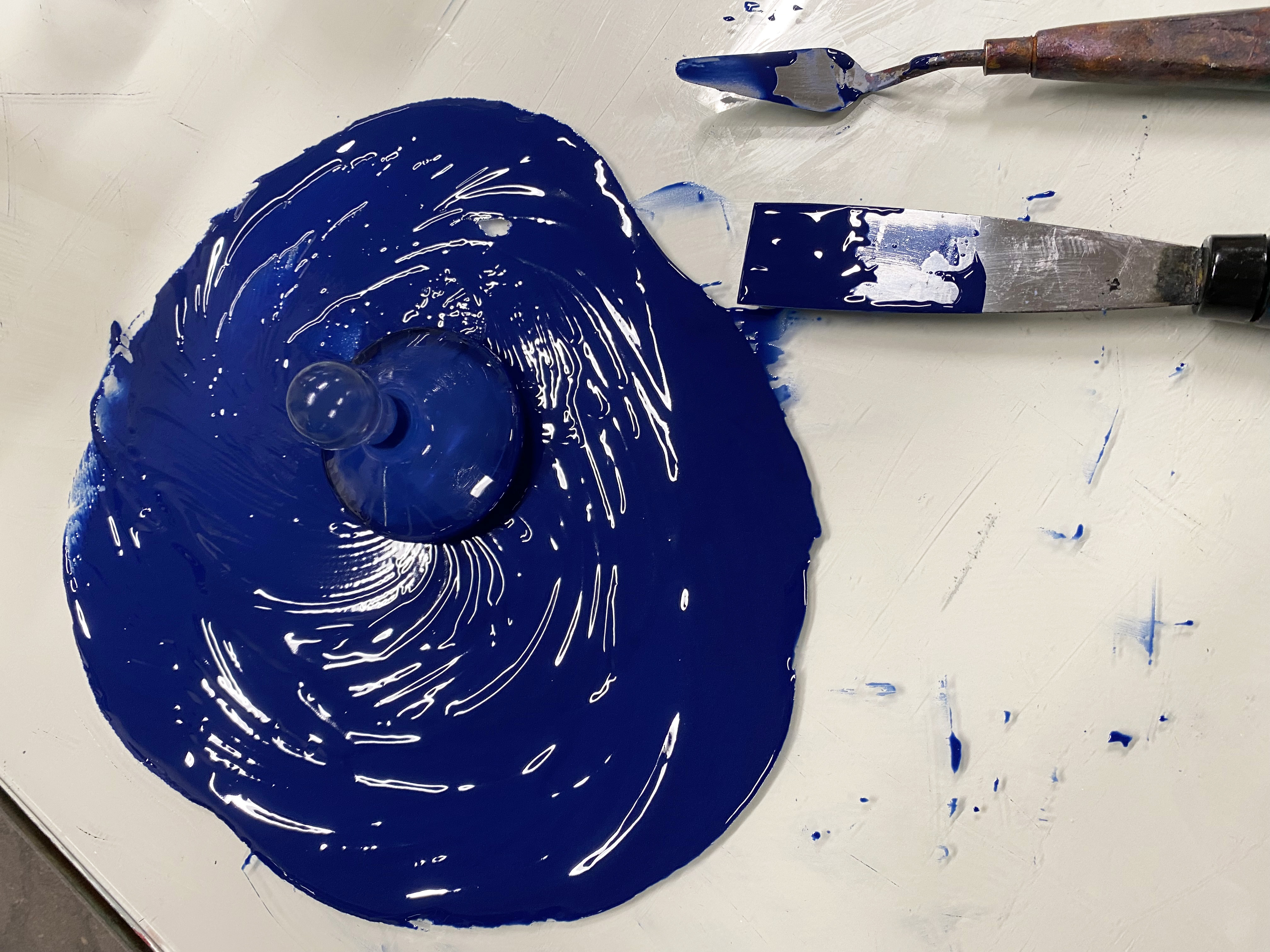
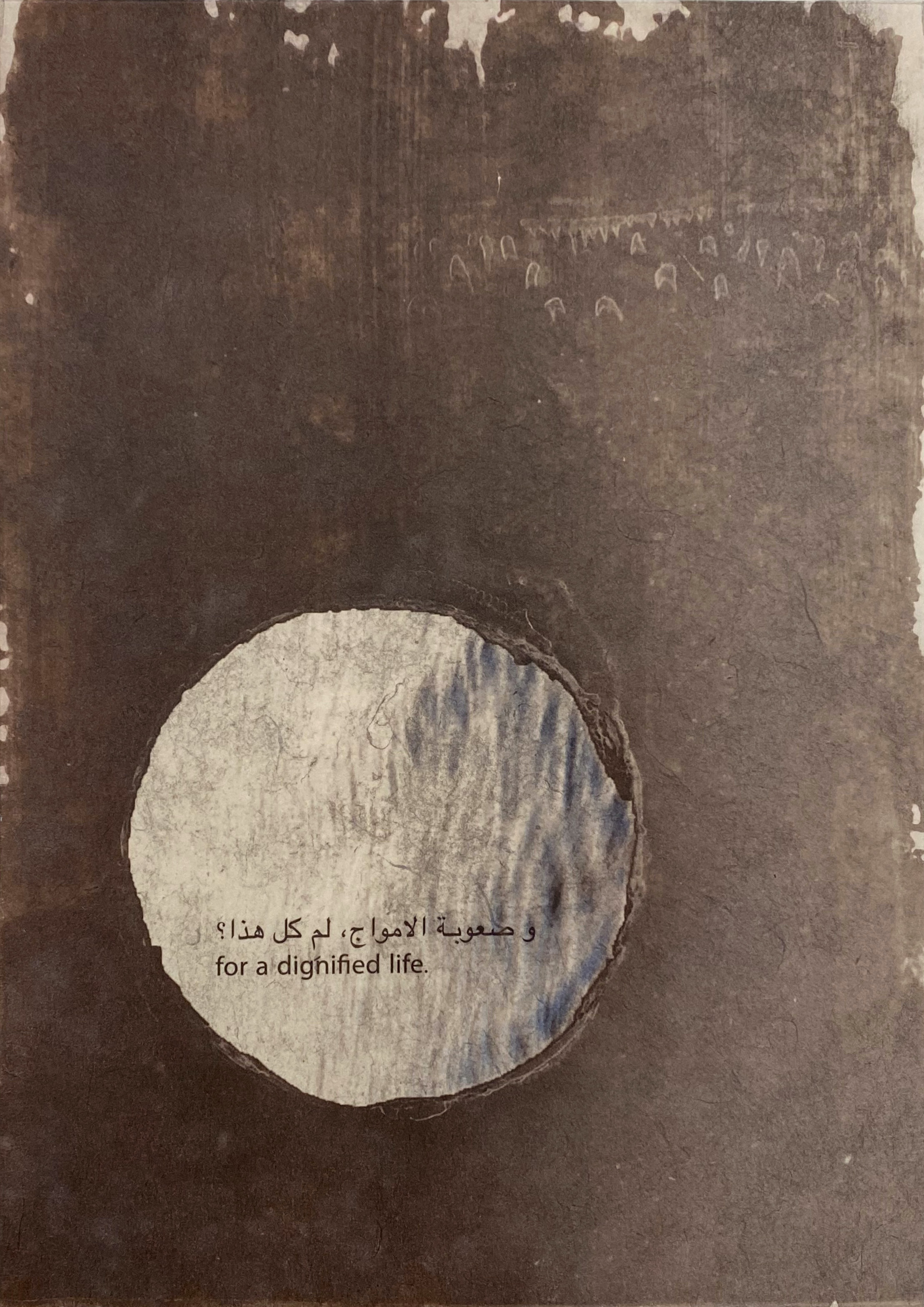
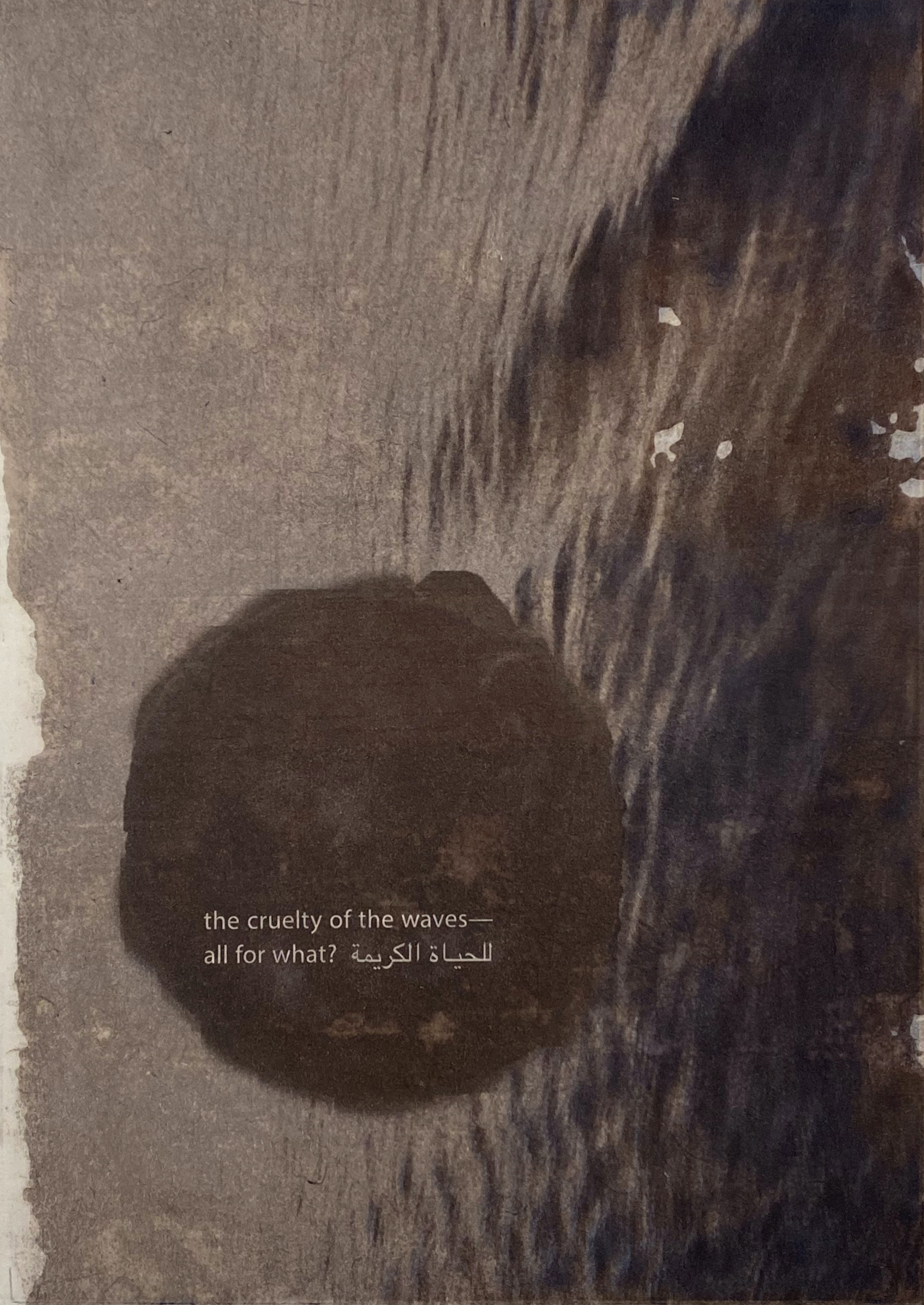
The first layer originates from 16 mm film footage of the sea, which I have shot over the past decade. I translate this into a digital positive and transfer it onto a photopolymer plate. It is printed with etching ink made from ultramarine derived from lapis lazuli from Afghanistan.
Over this, a salt print on thin Japanese paper presents graffiti documented outside refugee camps across the Mediterranean. The two images are brought together through the printing press using a technique called chine-collé.
In the intersection of these layers, the sea becomes abstracted into a blue mark — like a bruise — overlaid with stark graffiti from refugee camps across the Mediterranean.
During the artistic process, I turned to materials that, for millennia, have crossed the Mediterranean Sea alongside human movement, such as Mediterranean salt and lapis lazuli.
The precious blue pigment derived from lapis lazuli came to be known as ultramarine (from the Latin ultramarinus, ultra mare, literally means “beyond the sea” or “over the sea”). The sea the pigment crossed was the Mediterranean.
Lapis lazuli, whose name bears traces of linguistic exchange — from Sanskrit through Persian and Arabic to Latin — has played a decisive role in Western art history. During the Middle Ages, Europe began importing the blue pigment extracted from lapis lazuli mined in what is now Afghanistan. The highest grade of this pigment later became known as Fra Angelico Blue, named after the Italian Renaissance painter and monk.
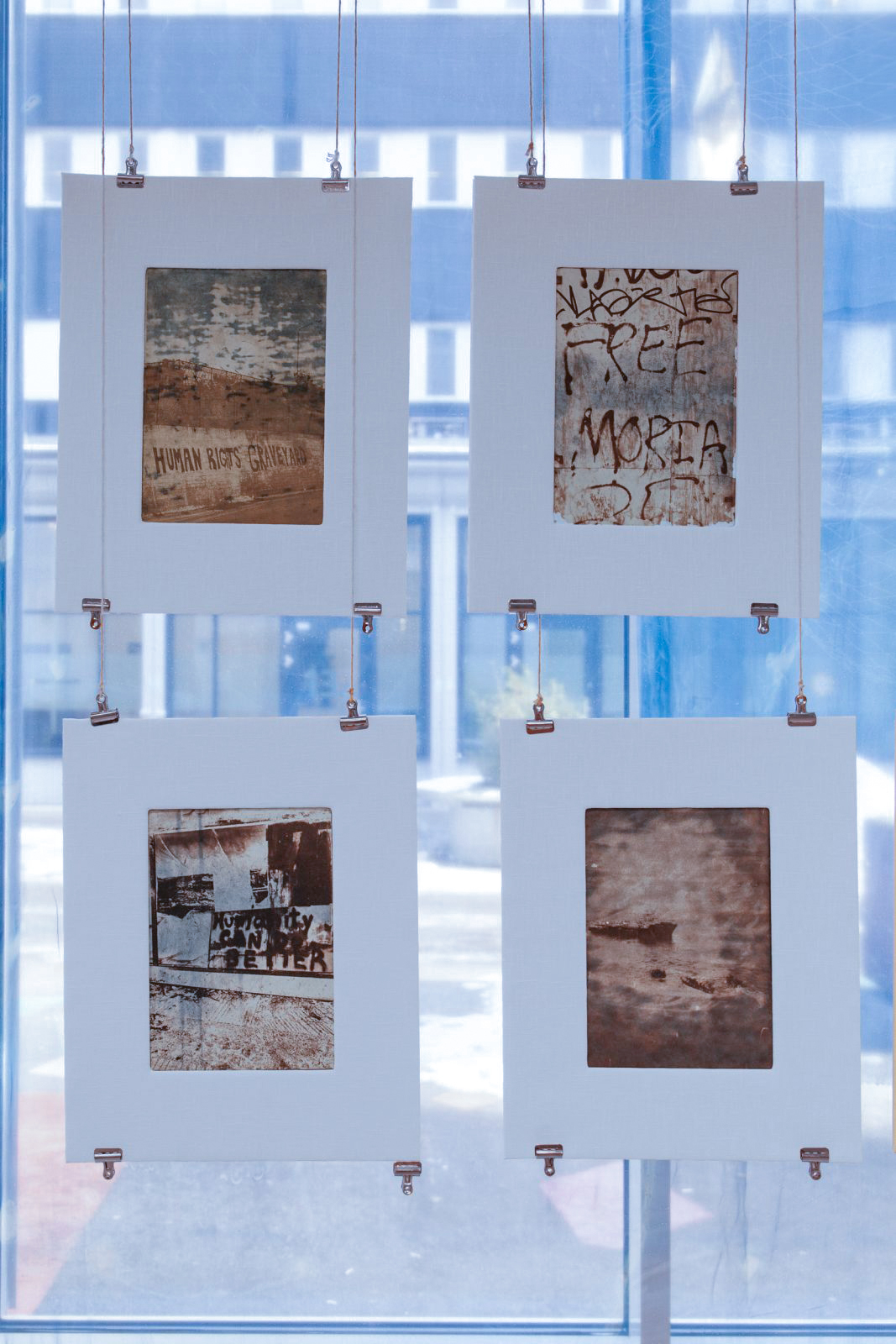
Installation view, Botkyrka Konsthall, 2026. Photo: Hanna Ukura
Salt prints, chine collé, photopolymer prints, linen passepartout, cyanotype on silk.
In the Mediterranean, where Malta is located, two contrasts are simultaneously present: the tourist and the refugee.
Fifty years after Anders Fogelins’ Från Malta, I return to Malta to look at it from another perspective: forgrounding a vessel from the humanitarian organization SOS Méditerranée— founded in 2015 in response to the escalating humanitarian crisis in the central Mediterranean.
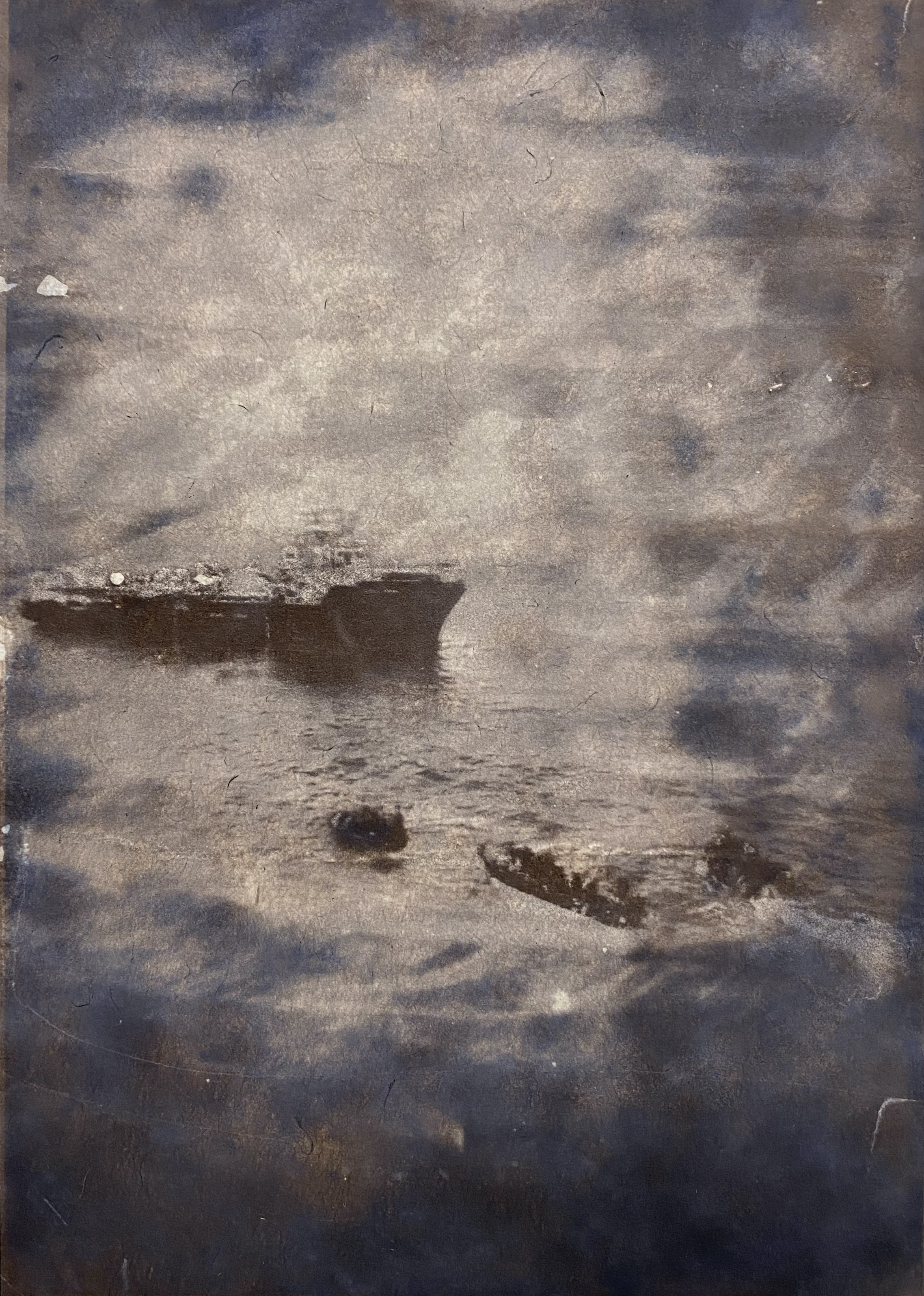
From Malta 2025 (SOS Méditerranée)
Salt print with Mediterranean sea salt on Kozo paper (46 g), chine collé, photopolymer gravure printed with ultramarine etching ink made fromlapis lazuli (Afghanistan, standard grade), on Hahnemühle paper (300 g).
21 cm x 29.7 cm
2026
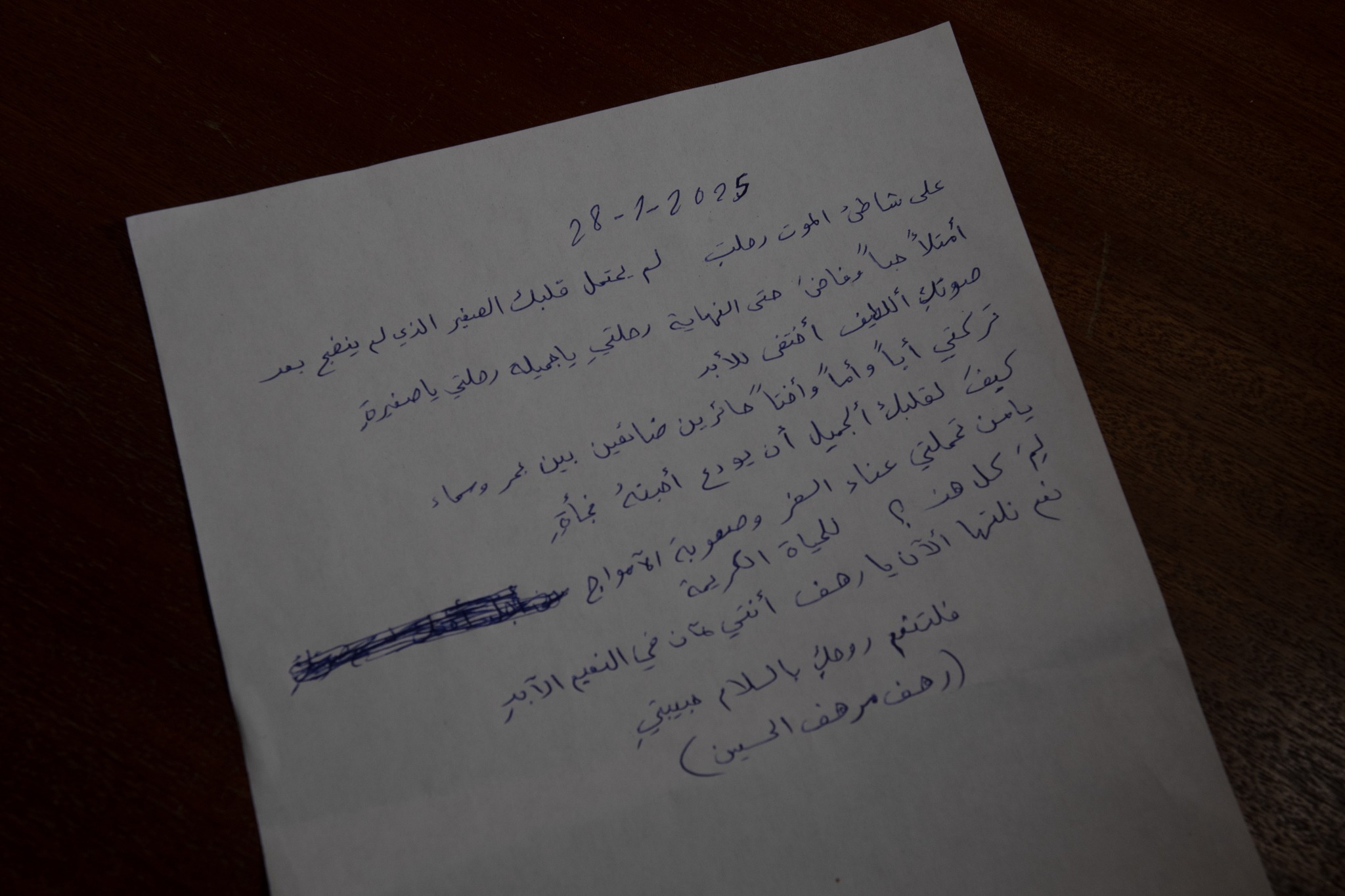
"On the shore of death, your journey ended.
Your little heart, still unripe, could not endure.
It was filled with love, overflowing until the very last breath.
You left, my beautiful one, my little one.
Your gentle voice has vanished forever,
Leaving behind a father, a mother, and a sister—
Lost, wandering between sea and sky.
How could your kind heart bid farewell so suddenly?
You bore the hardship of travel, the cruelty of the waves—
All for what? For a dignified life.
Yes, you have found it now, Rahaf.
You are in eternal bliss.
May my soul rest in peace, my love"
— Rahaf Murhaf Al-Hussein
Another site addressed in the installation is Moria, once one of the European Union’s largest refugee camps on the island
of Lesbos, which burned down in 2020.
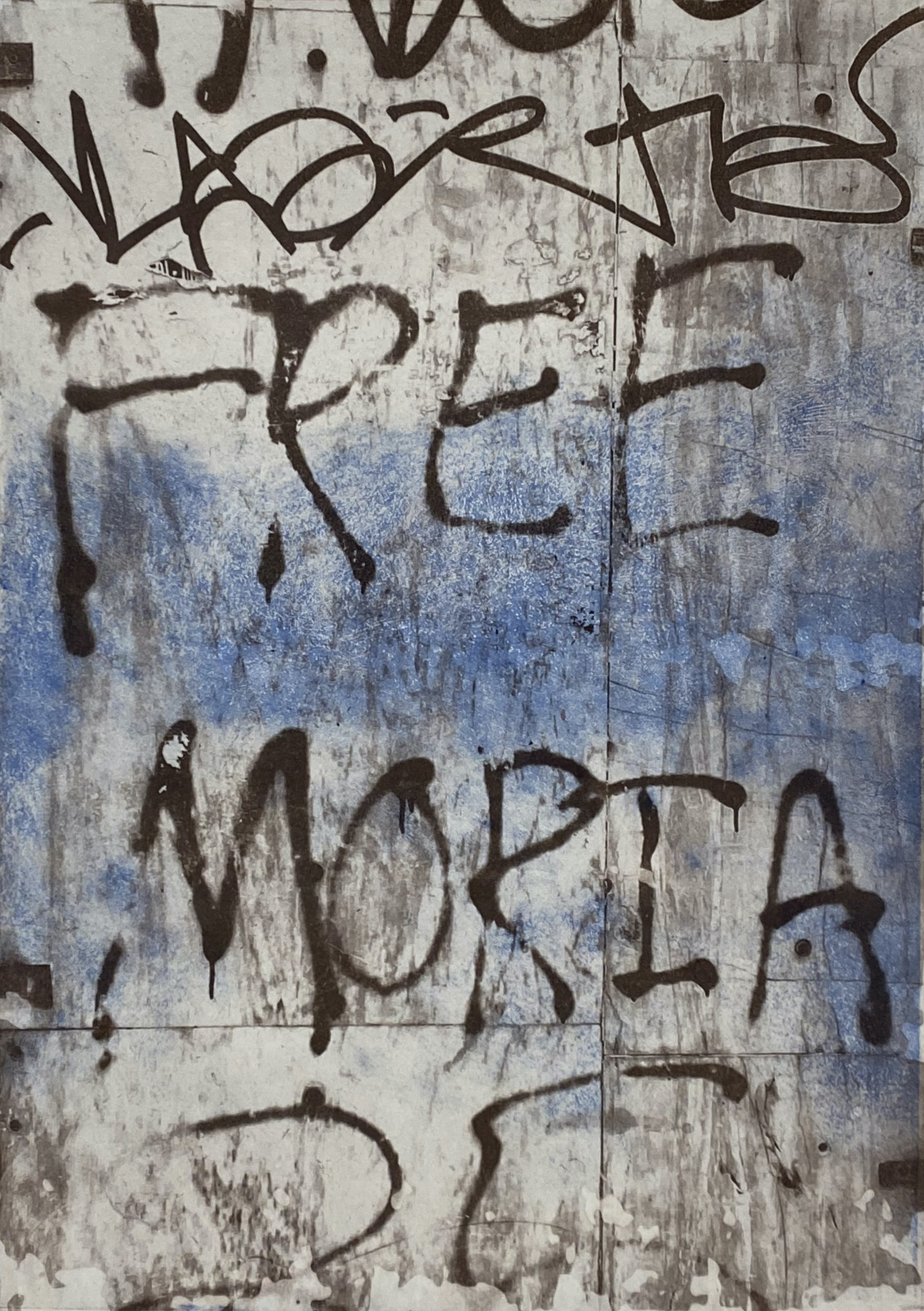
Free Moria (I)
Salt print using Mediterranean sea salt on Kozo paper (46 g), chine collé, photopolymer gravure printed with ultramarine etching ink made
from lapis lazuli (Afghanistan, standard grade), on Hahnemühle paper 300 g.
21 cm x 29.7 cm
2026
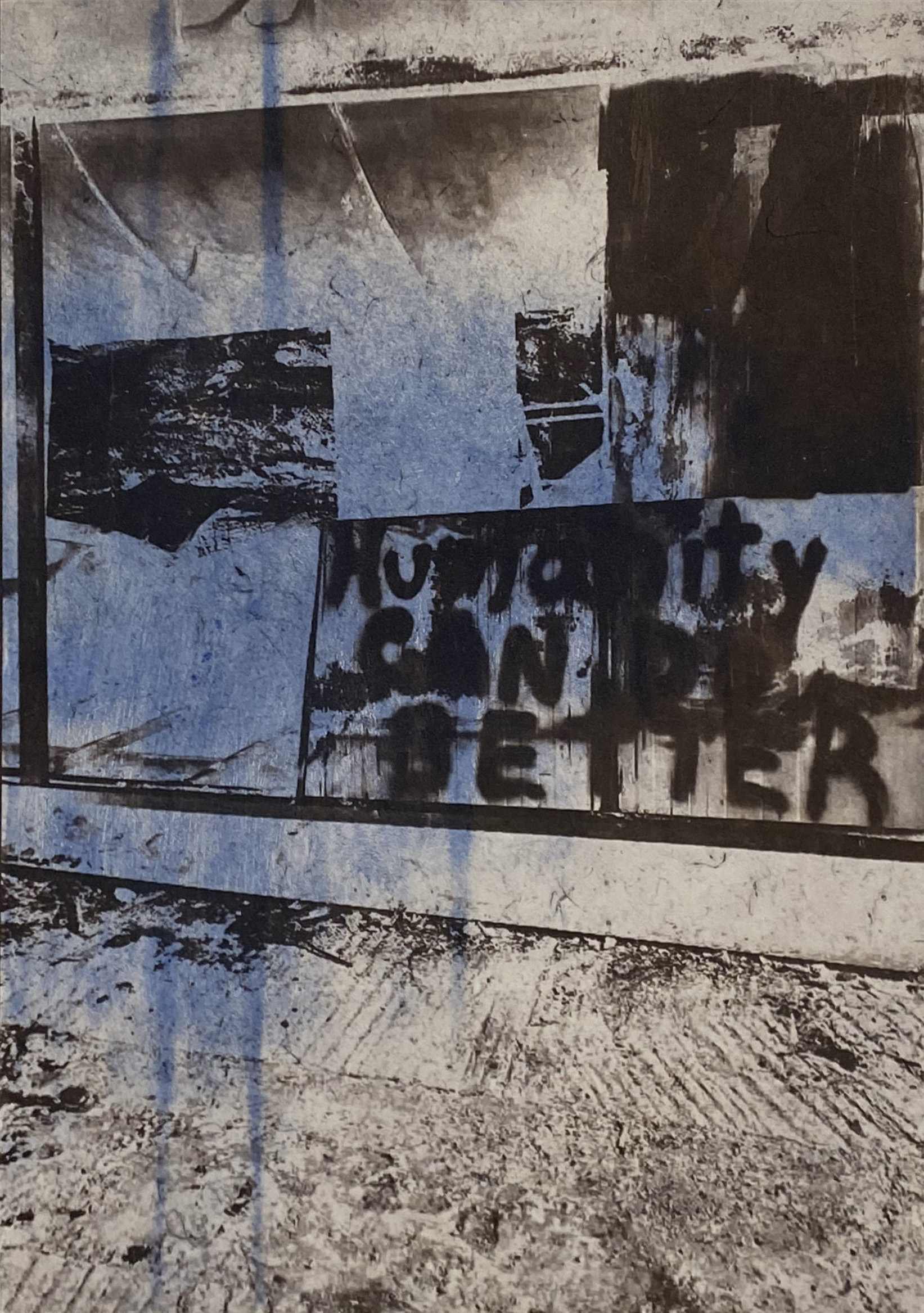
Free Moria (II)
Salt print using Mediterranean sea salt on Kozo paper (46 g), chine collé, photopolymer gravure printed with ultramarine etching ink made
from lapis lazuli (Afghanistan, standard grade), on Hahnemühle paper 300 g.
21 cm x 29.7 cm
2026
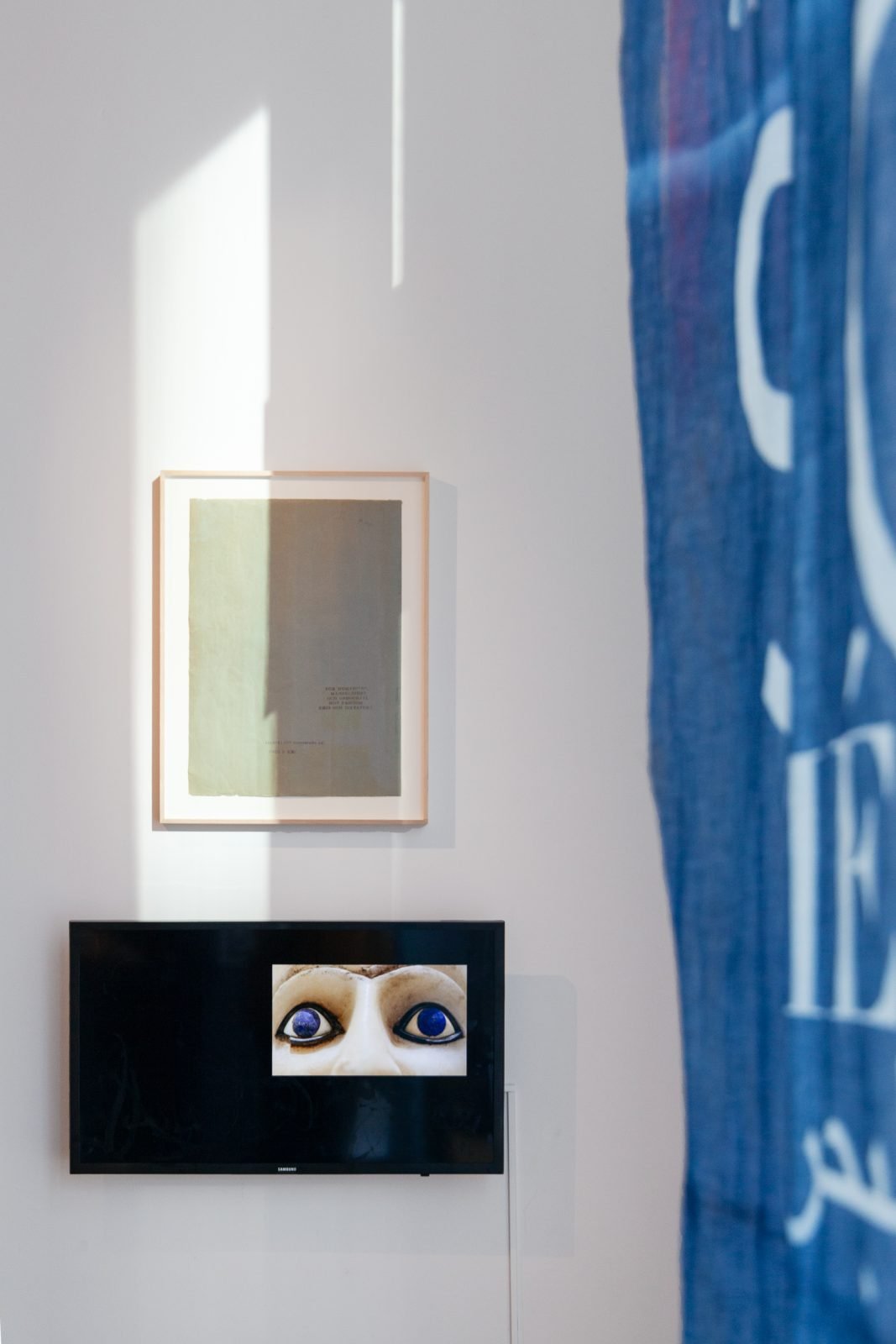
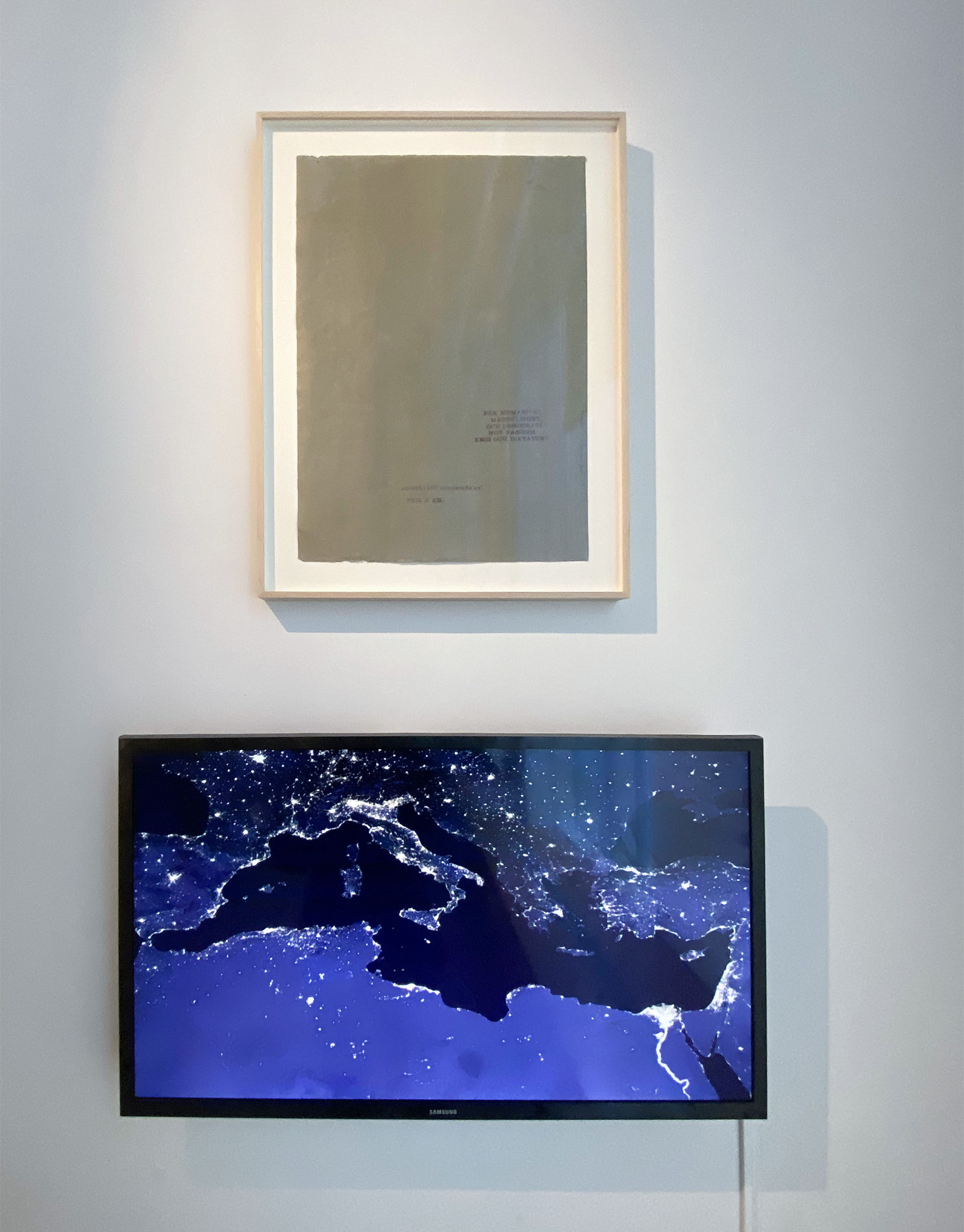
Another work from the Botkyrka collection that became an important reference for this exhibition is this print by Sven “X:et” Erixson from the 1930s, created as an early warning against fascism in Europe.
I chose to exhibit the reverse side of the print, where it reads:
"For humanity, human dignity, and democracy. Against fascism, war, and dictatorship".
These lines became a grounding context for the body of work I have made for this exhibition.
Nearly a century later, they still feel deeply relevant and reminding us that the struggle for human dignity is not historical, but ongoing.
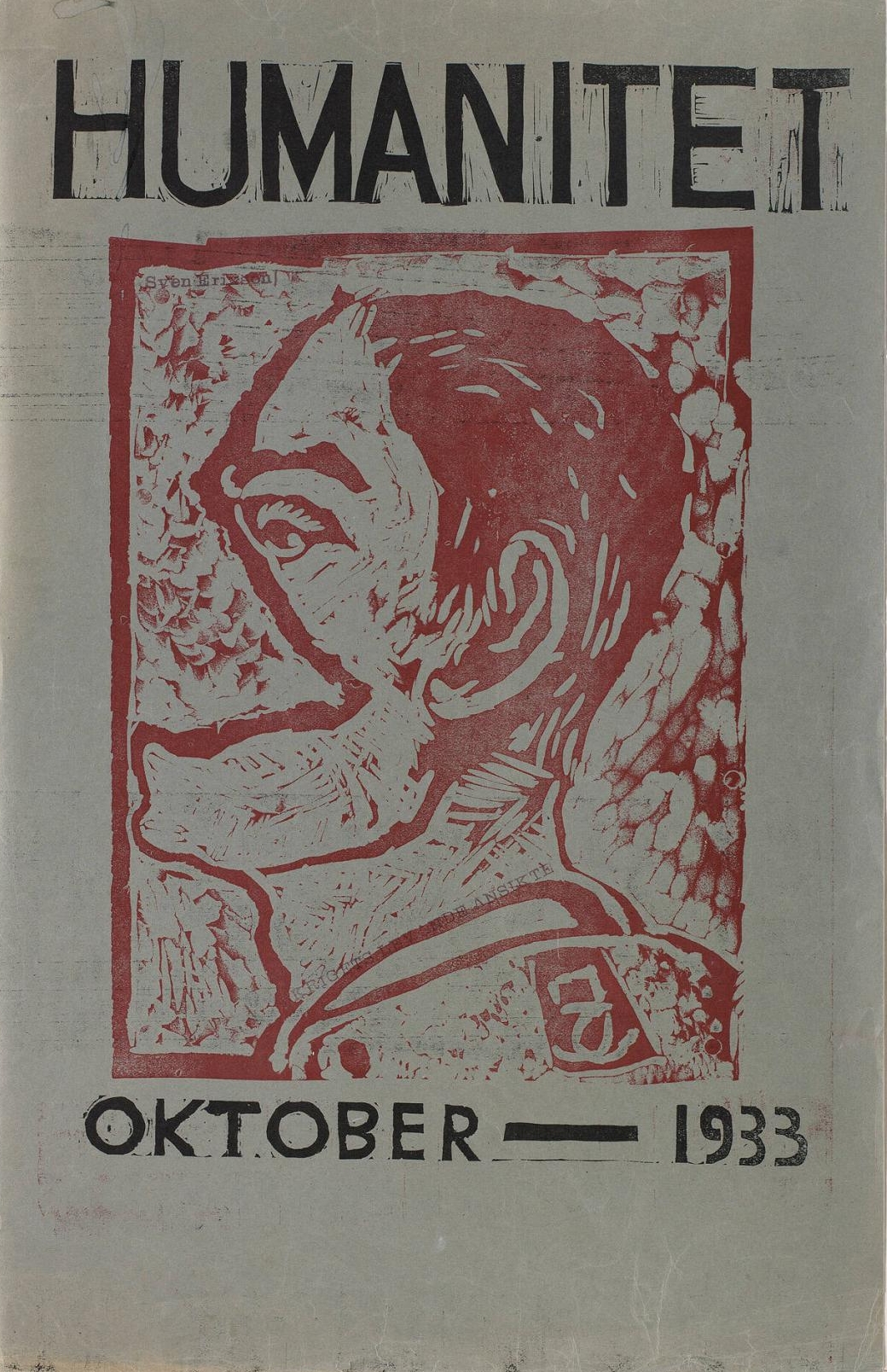
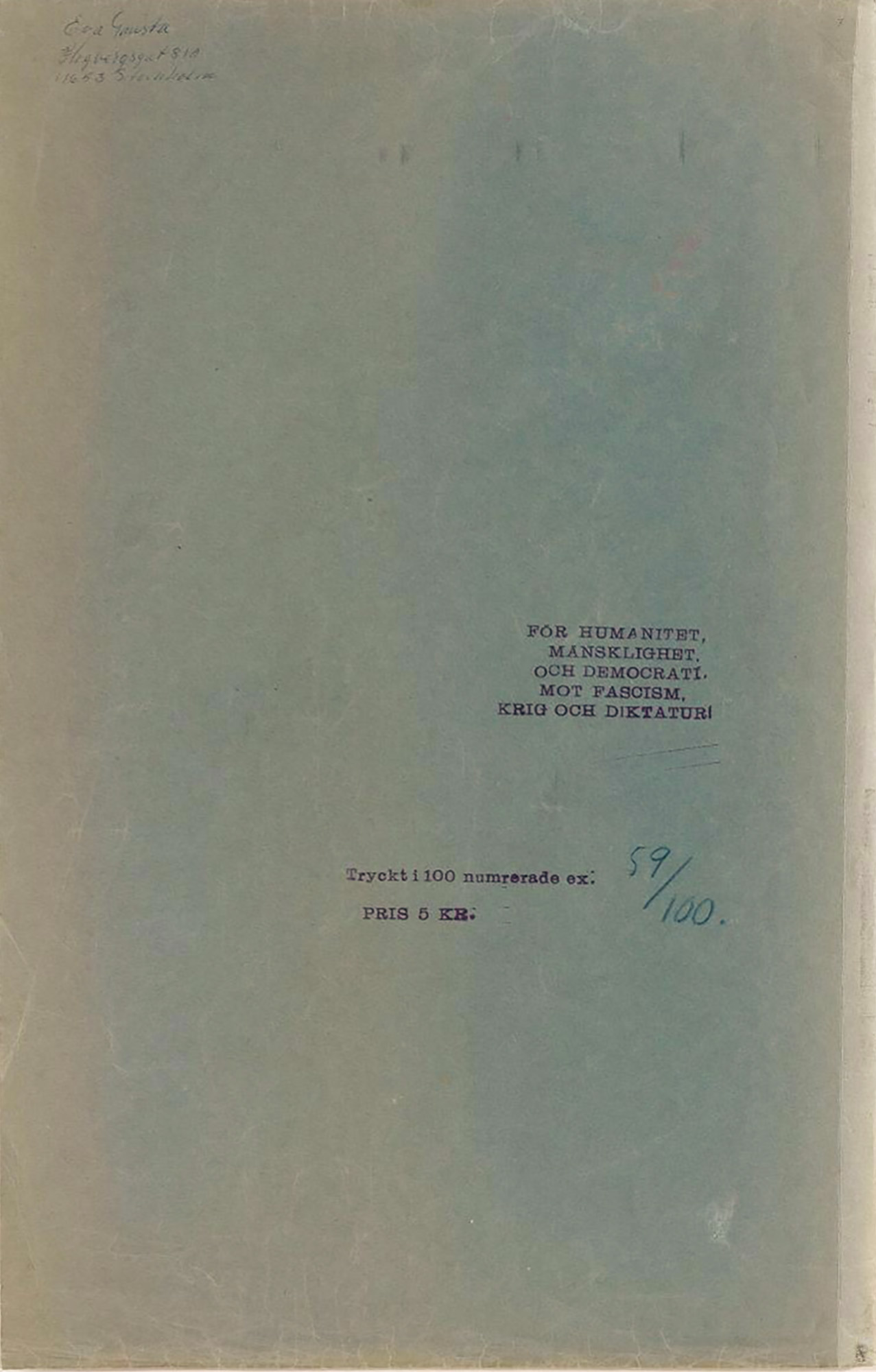
Krigets levande ansikte/ The living face of war. Humanitet, October 1933.
Sven “X:et” Erixson
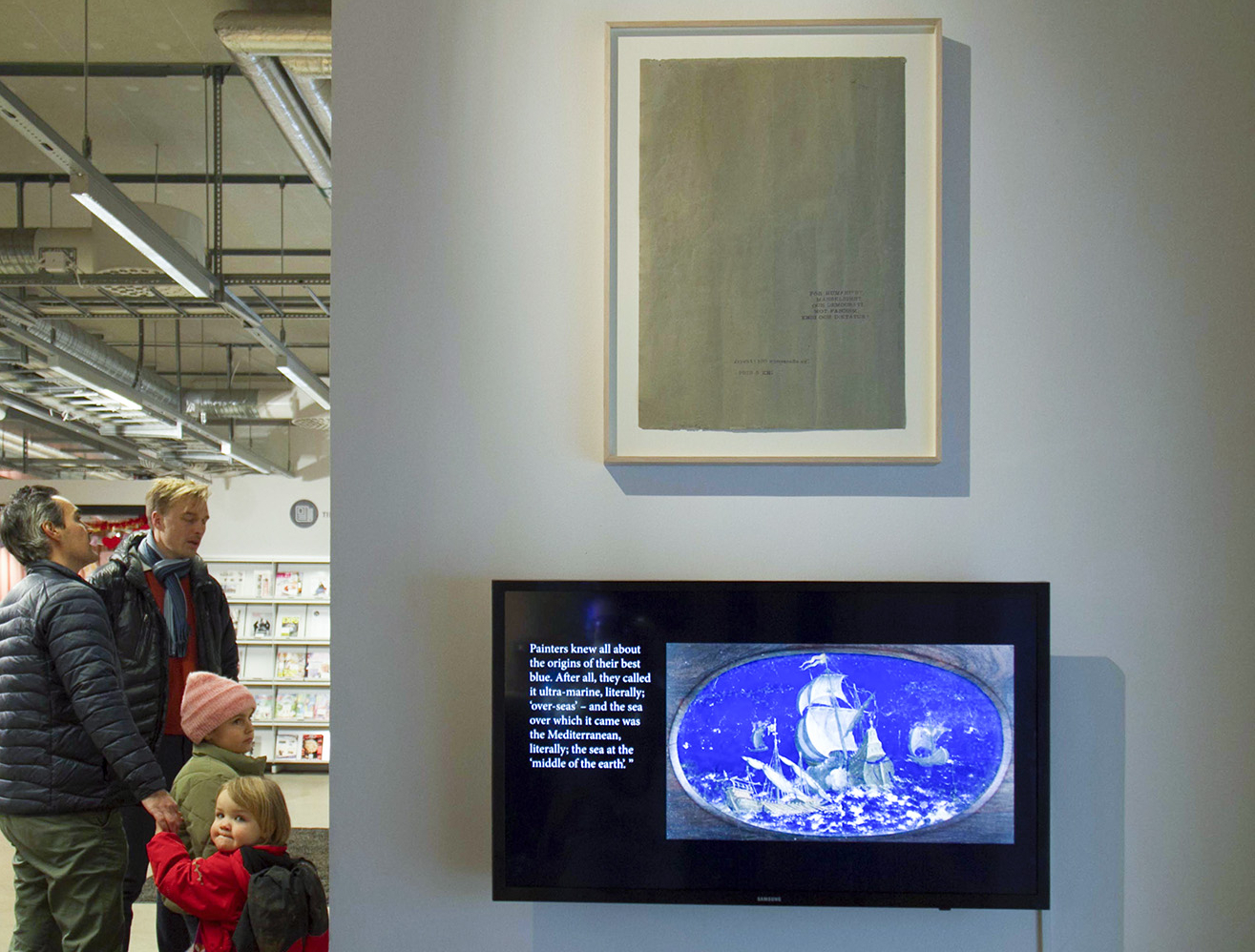
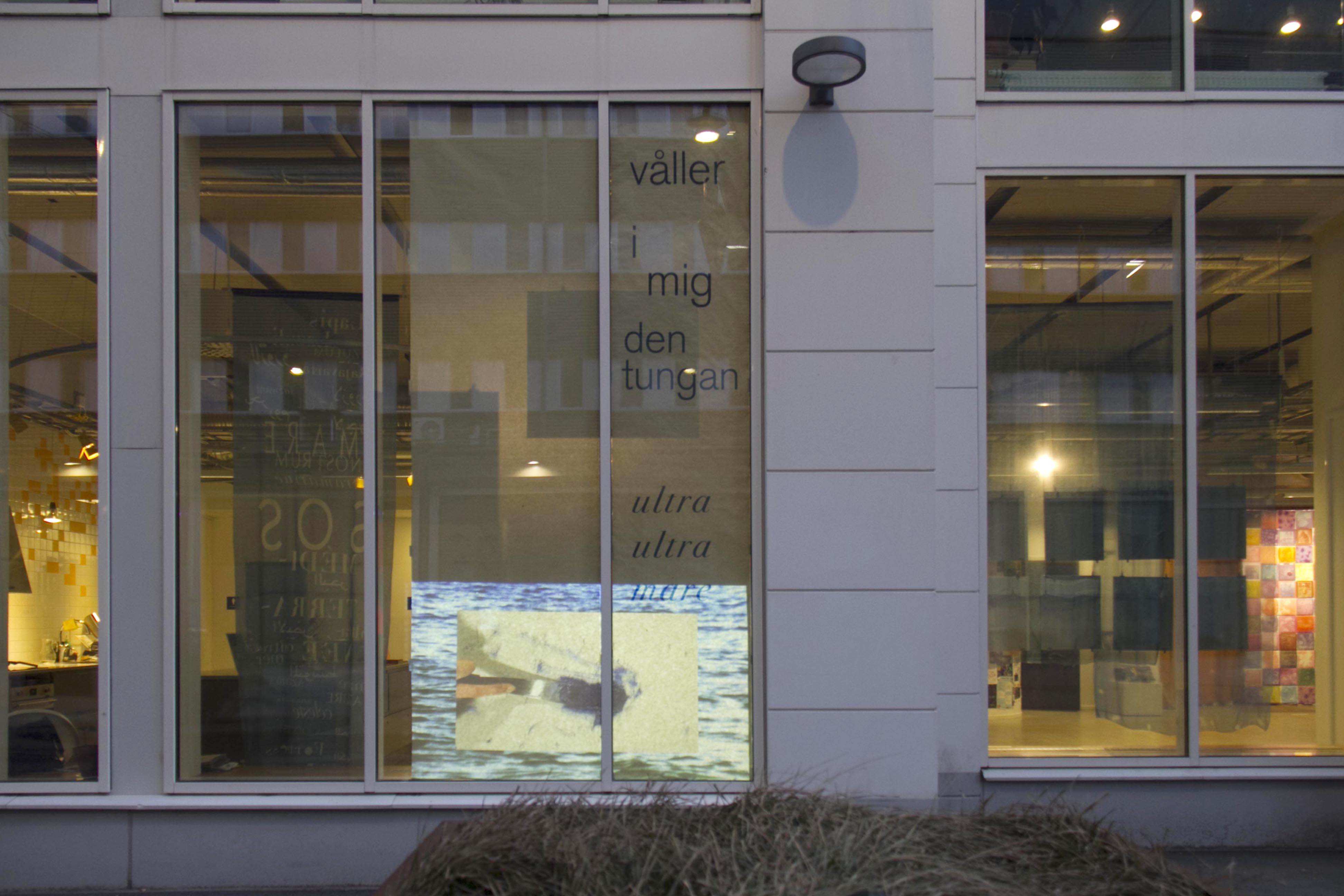
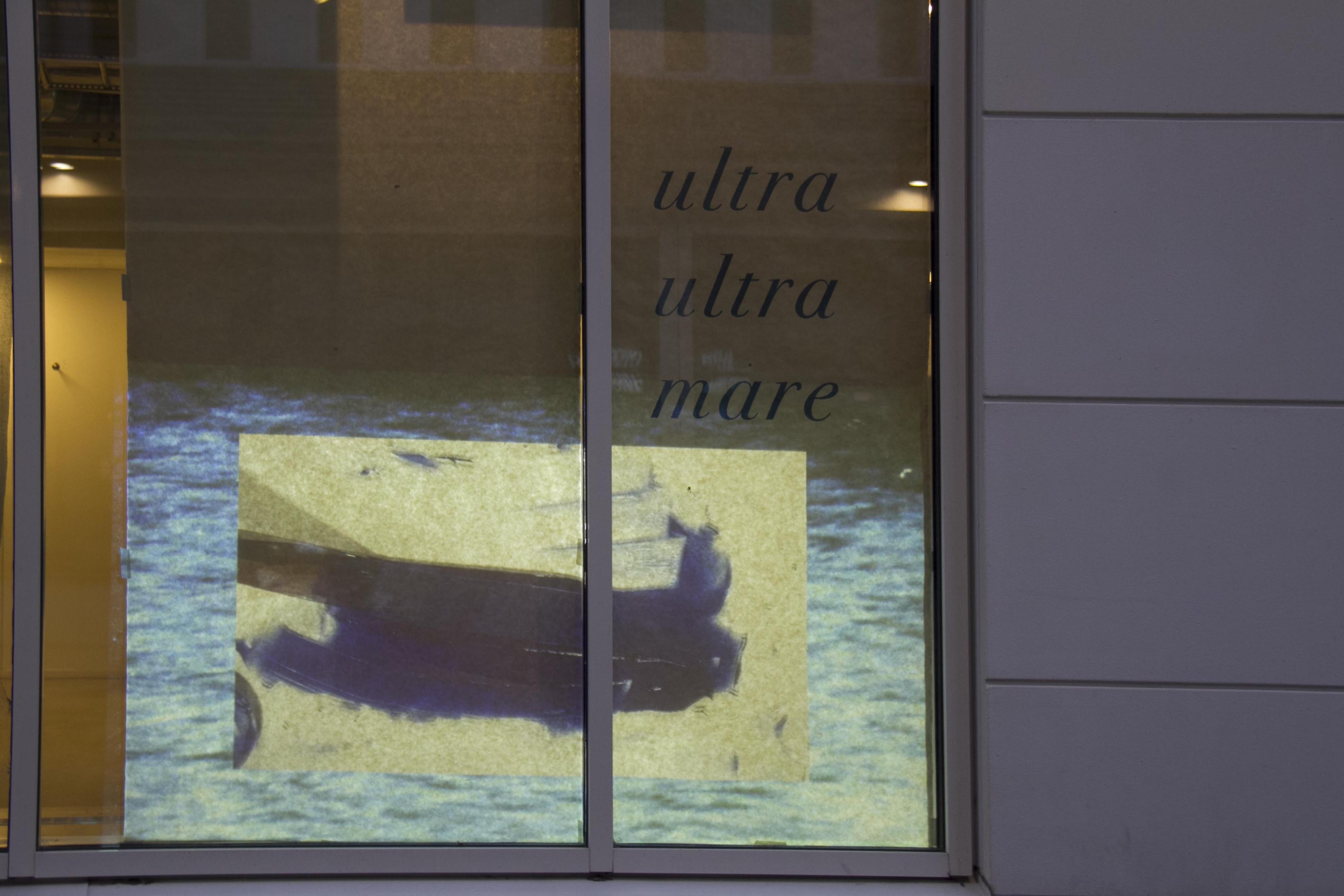
“Ultra mare” (literally “beyond the sea”) is Latin for “beyond the sea.”
The term carries echoes of:
– the ultramarine blue pigment, derived from lapis lazuli, historically transported across the sea — across the Mediterranean — from quarries in Afghanistan
– crossings of the Mediterranean
– “beyond the sea” as a spatial imagination
ultra ultra mare (literally “beyond — beyond the sea”) holds all of these meanings, but also what lies beyond them — other layers, other connotations, that which has not yet been named.